
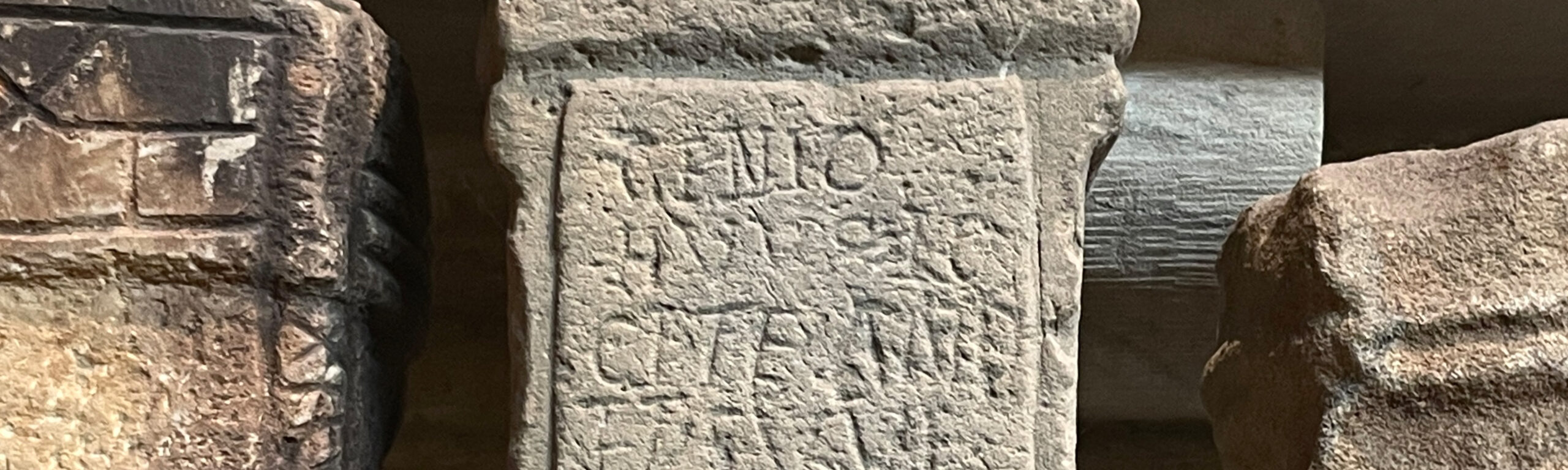
Portable Altars
During the Romano-British period, religious observance was woven into daily domestic life, often centred on small household shrines where local deities were integrated into the Roman pantheon. [1] Literary references to English pagan worship exist, [2] with altars and idols frequently mentioned, yet such texts seldom provide locational detail that can be reliably correlated with archaeological evidence. More valuable insights into religious practice are furnished by portable material culture, particularly altars and other explicitly religious artefacts. [3]
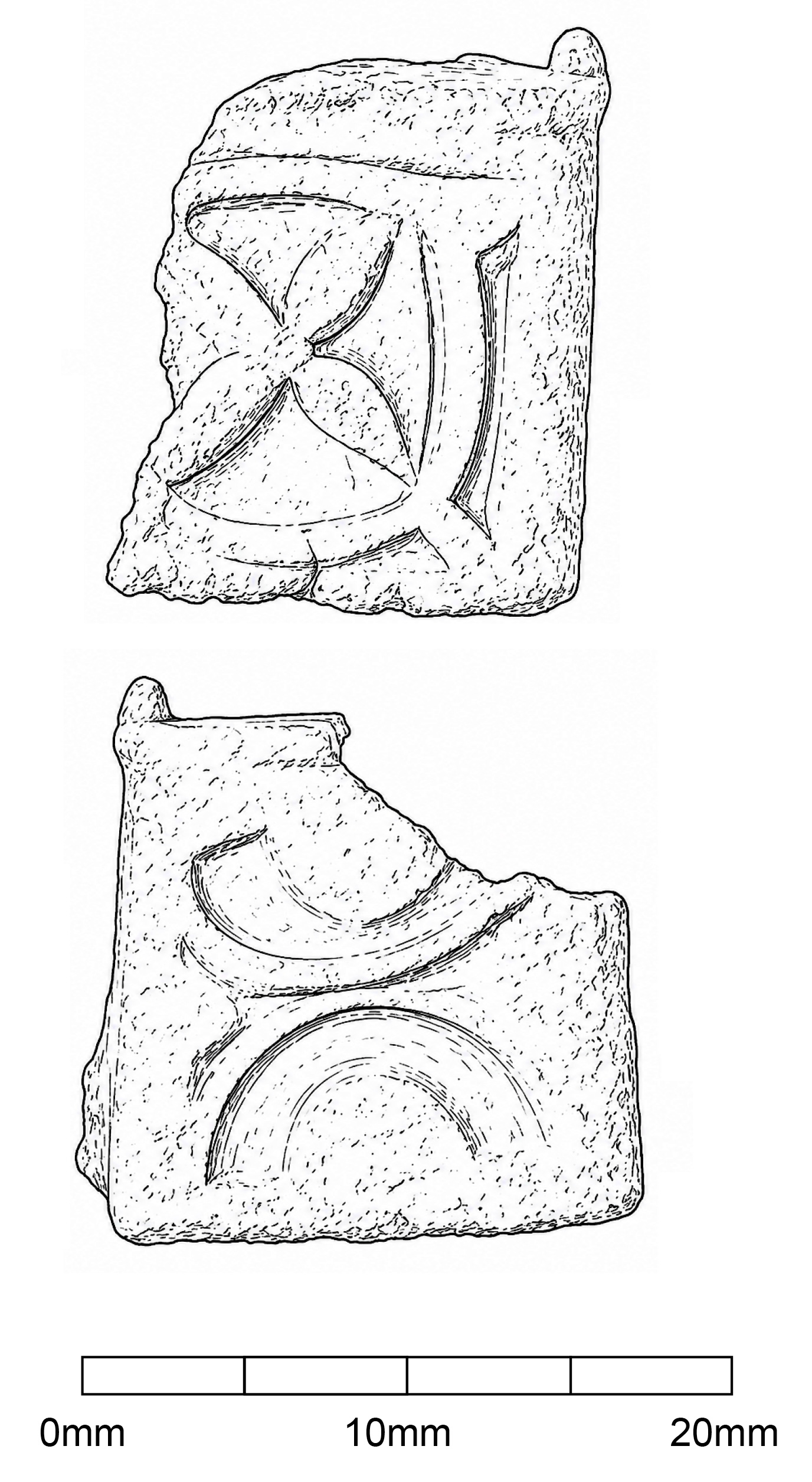
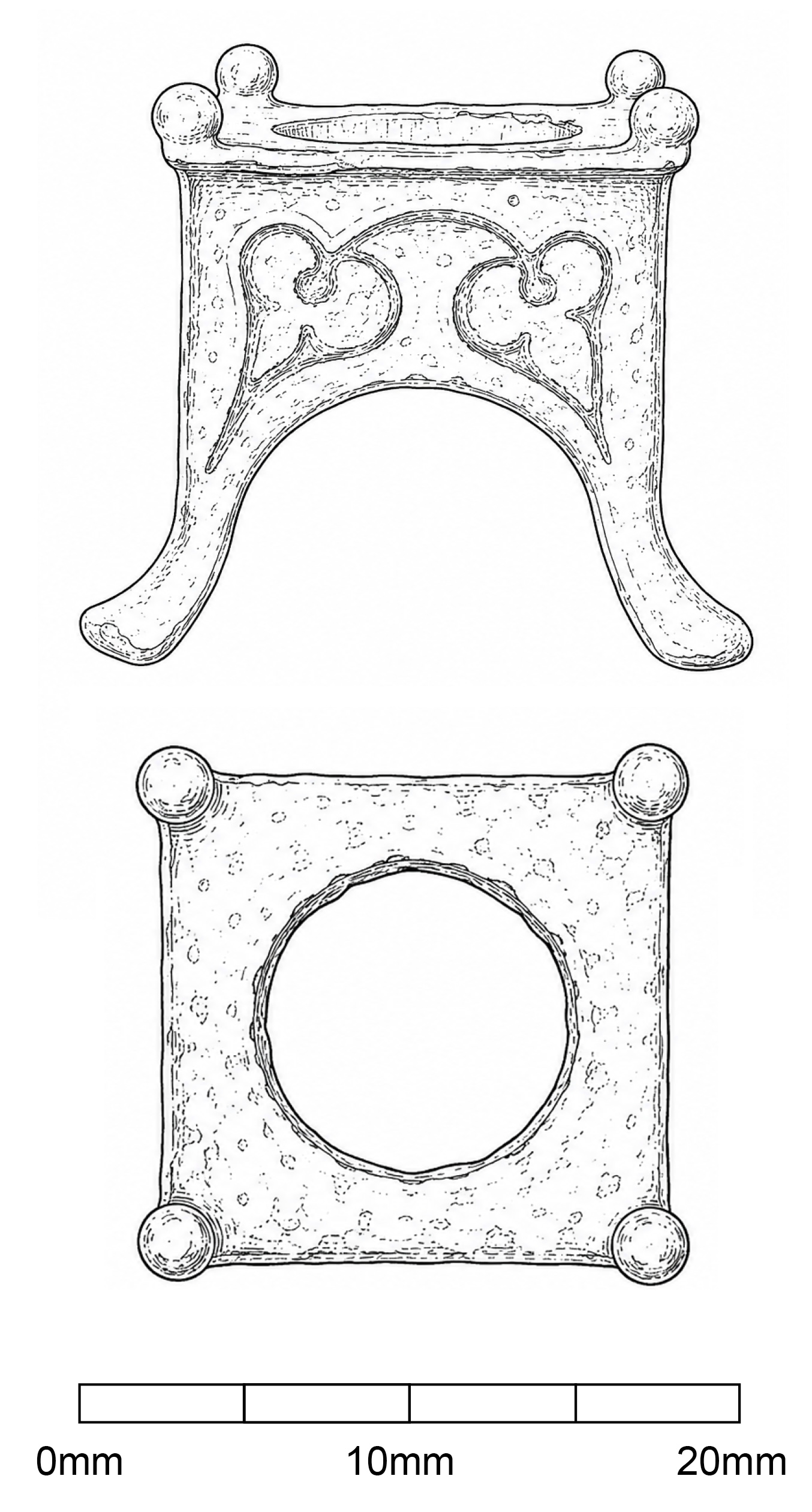
Roman portable altars were typically made of stone* and measured between 21 and 30 cm in height, though examples varied considerably. A copper alloy votive altar of Roman date (43–410 AD) discovered in 2015 at Great Saxham, Suffolk measured just 16.3 mm and weighed 3.86 g, while others reached up to 170 cm, though whether such large examples were truly “portable” is debatable. [4]
These objects were primarily functional, serving domestic worship and personal devotion to household gods, ancestors, or specific deities. They symbolised a transportable connection between the owner and the divine, enabling ritual purity and religious practice wherever permanent shrines were unavailable. In this way, altars facilitated private ‘cult’ practice while inscribing religion into diverse landscapes, linking intimate household practices with broader networks of movement, settlement, and sacred space. The Great Saxham find is particularly striking, demonstrating how even miniature artefacts could embody devotion, portability, and symbolic resonance.
Of the 444 complete altars known in Britain, 3 groupings of Romano-Celtic deities emerge: [5]
Silvanus and Sulis – aligned with ‘official’ cults, using conventionally sized altars, especially at Bath (90–100 cm). Their dedications, along with those to Sulis Minerva at Bath, are prime examples of syncretism between local and imperial cults.
Matres and Cocidius – linked to portable altars, typically 41–50 cm.
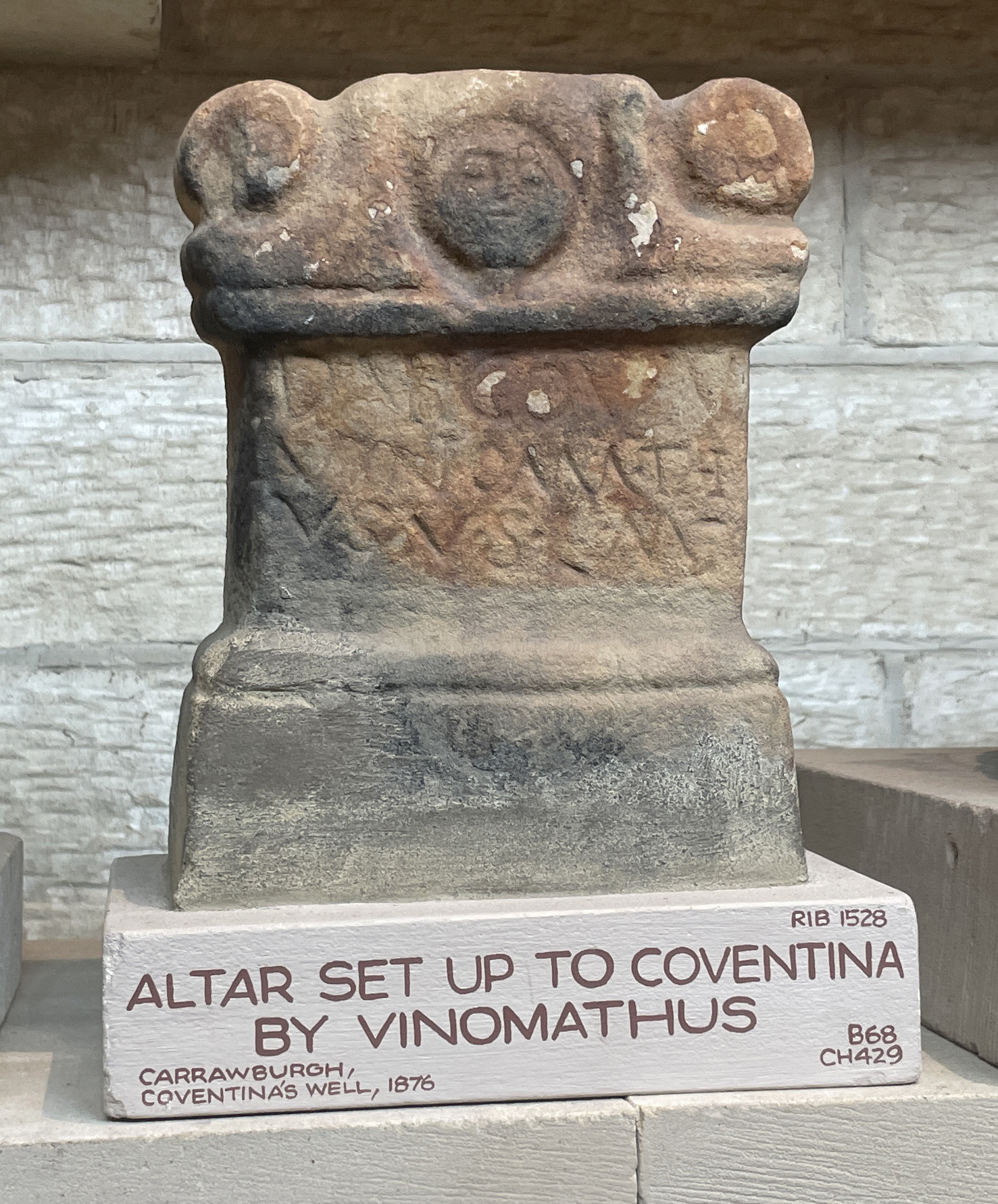
Coventina, Belatucadrus, and Vitiris – strongly associated with small and very small altars [6] often tied to natural features such as springs, forests, or boundary landscapes.
Of course, portable altars were dedicated to a vast array of other gods and goddesses, fostering deep connections between individuals and the genius loci, the spirit of place. This relationship was cultivated through placement, dedication, and symbolic design, as tangible expressions of the bond between worshipper and landscape.
The votive altar, as an ideotechnic device, an object that can embody and transmit ideas, beliefs, or symbolic systems, can reveal much about the interface between local and foreign cosmologies. [7] Its emulation and adaptation facilitated the construction of new identities through cult practice, even under the pervasive shadow of military occupation. This dynamic is particularly evident in the hinterland of Hadrian’s Wall, where some sixty-one altars were dedicated. [8] Traditionally, such dedications to local deities along the northern frontier have been interpreted as either a neutral blending of religious traditions or as gestures by foreign soldiers honouring the genius loci. Yet movement through and around the landscape itself shaped the perception of these numinous locations, embedding them within lived experience and ritualised spatial practice. [9]
This raises broader questions about societies and individuals: do their beliefs “lie locally or abroad”? Does myth submerge the past in the present through the agency of myth? [10] The presence of local deities on altars, often with unique iconography and inscriptions, highlights how individuals expressed their connection to the immediate environment and heritage. Landscapes are socially and symbolically constructed, representing a potential map of cultural cosmos. The act of using an altar created temporary sacred space that was ritually pure, suitable for interacting with gods even in “profane” (non-temple) locations, ensuring continuity of religious practice during travel, campaigns, or in places without public temples. [11]
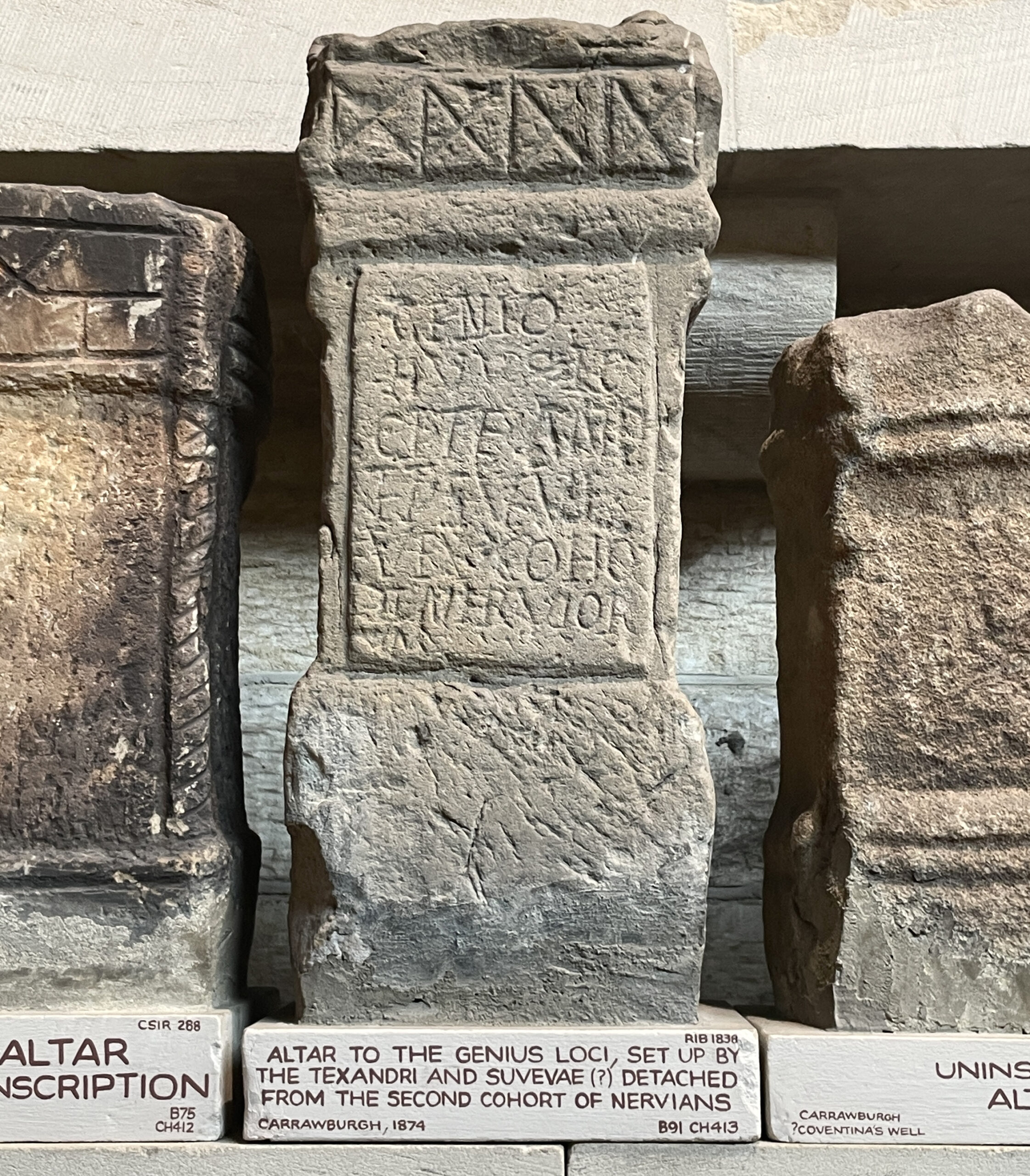
At Carrawburgh, a Roman fort site on Hadrian’s Wall in Northumberland, eleven portable altars dedicated to the water goddess Coventina, often associated with rivers, wells, or forests, were deliberately placed in groups, in a series of separate acts. [12] These dedications allowed individuals to honour the genius loci and seek its favour or protection. Altars to Coventina, placed in her sacred well, symbolised the intimate relationship between worshipper and spirit of the water source. Placement of altars in meaningful locations, wells, pits, or shrines reflected belief in the sanctity of place.
These acts of dedication were not only offerings but also rituals that symbolised the individual’s acknowledgement of the spiritual significance of the place. For example, the structured deposition of altars in Coventina’s Well suggests a recurring practice of honouring the spirit of the site. Such practices suggest a ritualistic act to preserve the sacred connection between the deity and the water source and the goddess, emphasising the sacredness of the natural landscape. The repeated, deliberate nature of these acts points to a ritualised rhythm of devotion, embedding cosmological meaning into the frontier landscape.
Romano-Celtic altars thus served as media connecting individuals with cosmological beliefs and the surrounding landscape. Through personal dedications, specific placements, and symbolic imagery, they reflected the intertwining of the divine, the natural world, and personal identity. Through their placement, design, and use, they wove together personal, spiritual, and environmental dimensions of life, creating a harmonious bond between worshipper and the sacred spirit of place.
*Footnote. Buff sandstone, Gritstone, Limestone, Millstone, Red sandstone, sandstone, white marble. [13]
References
- Bird, D., (2006). Roman religious sites in the landscape. In: J. Cotton, G. Crocker and A. Graham, eds. Aspects of Archaeology and History in Surrey: Towards a Research Framework for the County. Guildford: Surrey Archaeological Society.
- Bede, 731 (1990). Ecclesiastical History of the English People. Translated by L. Sherley-Price, R.E. Latham and D.H. Farmer. London: Penguin Classics, a copy of the letter which Pope Gregory sent to the Abbot Mellitus then going into Britain. 601 A.D.
- Historic England 2018 Shrines (Roman and Post-Roman): Introductions to Heritage Assets. Swindon. Historic England.
- King, A. (2017) ‘Carrying the Gods with them? Provenance and portability of altars to Romano-Celtic deities in Britain’, in Haeussler, R. & King, A. (eds) Celtic Religions in the Roman Period: Studies in Celtic Religion, Culture and Mythology. Celtic Studies Publications. Aberystwyth: University of Wales Centre for Advanced Welsh and Celtic Studies.
- King, A. (2017) Ibid
- King, A. (2017) Ibid
- Goldberg, D.M., (2009). Contextualising ritual practice in later prehistoric and Roman Britain. PhD thesis, University of Glasgow.
- Goldberg, D.M. (2009) Ibid.
- Goldberg, D.M. (2009) Ibid.
- Evans, C. (1985). ‘Tradition and the cultural landscape; an archaeology of place’. Archaeological review from Cambridge vol.4.issue 1.
- Evans, C. (1985) Ibid.
- King, A. (2017) Ibid.
- King, A. (2017) Ibid.