
Tree Trunk Coffin, Risby Poor’s Heath
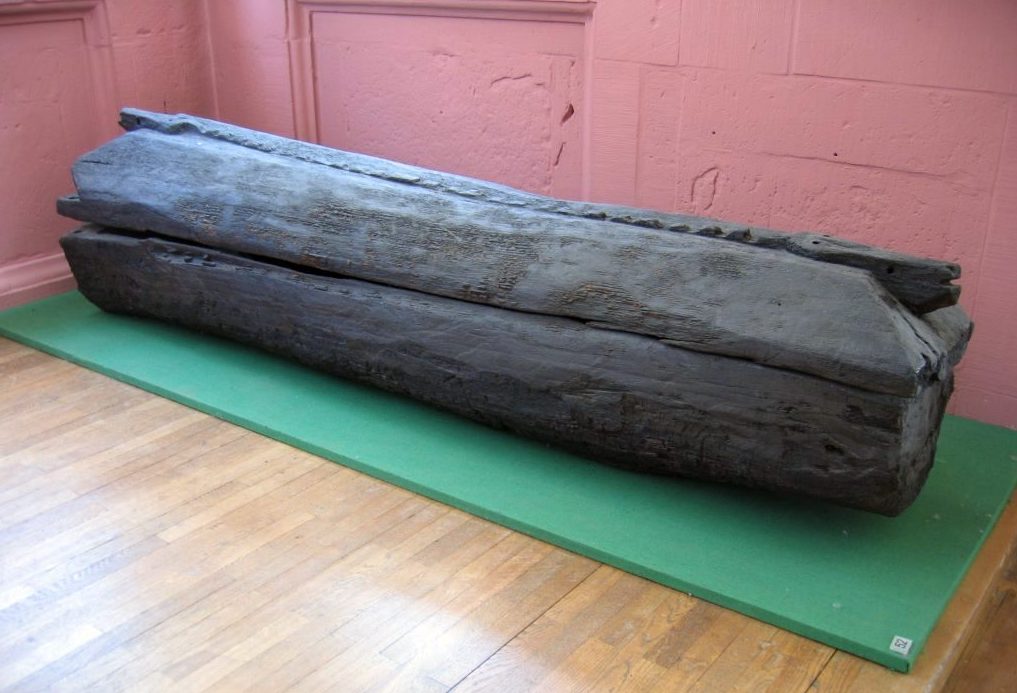
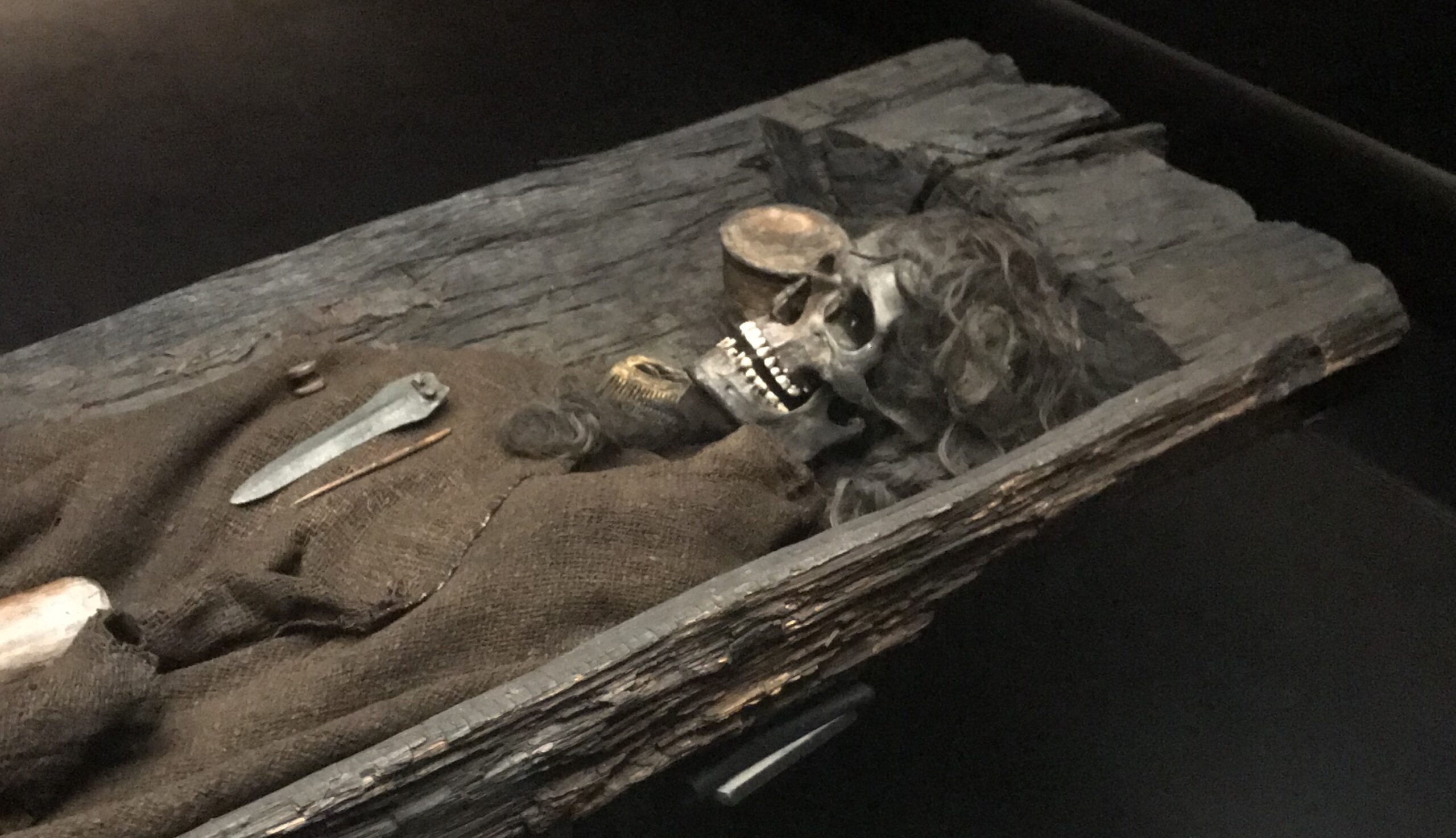
Across Norfolk and Suffolk, six tree trunk log coffins have been discovered associated with three barrows, with only one of these being in Suffolk. [1] Furthermore, the one example at Poor’s Heath, Risby, in Suffolk, is one of the earliest securely dated examples in the whole of Britain, with a radiocarbon date between 2300–2130 BC. [2] Excavated in 1964, [3] one of four barrows stood at 120 ft wide and 3 ft high [4] with the burial part of multiple interments within it. The Poor’s Heath barrow is part of a small cluster of four barrows near the Risby / Flempton parish boundary, forming part of a broader funerary landscape and is just 1.8 kilometres to the east of the Black Ditches. The burial sequence within the barrow was complex, with Burial 1 being an off-centre crouched child burial accompanied by a hybrid food vessel or beaker. [5] Burial 2 was a mature adult male with Burial 3, the log coffin containing a mature adult male of above-average height (175–178 cm) estimated to be 35–45 years at the time of death. [6] The log coffin itself was rectangular with a curved end, measuring 1.83m long, 0.45–0.61m wide, and 0.3m deep. Unlike the other burials, Burial 3 lacked grave goods, suggesting that the coffin itself may have served as a marker of status or identity. [7]
Over 2,600 years after the tree trunk coffin at Risby, at Sutton Hoo similar styled tree trunk coffins were resurrected and mimicked to some degree, as discovered in Mound 1 and 17, albeit these were slightly more elaborate as identified by curved iron clamps discovered that were used to secure a lid. [8] Tree trunk coffin burials remain “one of the most iconic Bronze Age rites” [9] and the crouched almost foetal burial position may have held symbolic significance. Cultural or religious context of the Bronze Age societies and may have been affiliated with concepts such as rebirth, fertility, or protection in the afterlife. [10] The earliest log coffins may have emerged from a diverse set of Chalcolithic funerary practices (2500–2200 BC) focusing on the containment and structured deposition of the deceased. [11]
While the wood species of the tree trunk coffin was not identified, oak was commonly used for log coffins elsewhere in the country, which is known for having many religious and mystical connotations. [12] As late as 550–575, in the cemetery at Snape branches of charred oak were carefully arranged in Grave 9 with pieces of oak ritually placed under and around the log boat coffin in Grave 4. [13] One thousand years later in the 16th century, oak continued to retain its cosmic associations as “can be seen in the pagan Prussians still celebrating their thunder god Perkuno – linked with Latin quercus (oak) – with a fire and images of gods placed in a holy oak”. [14]
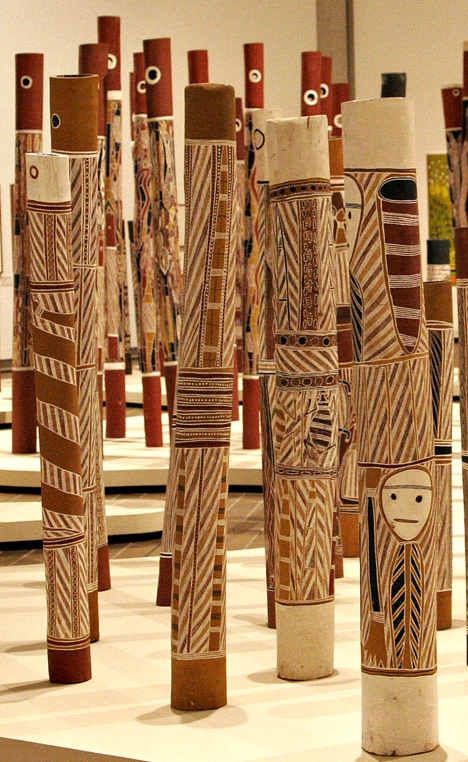
Quite why local communities “decided to encase and transform their dead within” [15] a tree trunk, we can only wonder at. Whether or not the tree trunk coffin was plain or richly decorated, we do not know. On the outer bark of tree trunk coffins created today by the Yolngu, an aboriginal society in the region of Australia’s Northern Territory called Arnhem Land, this funerary rite is still being used for deceased clan members. [16] The painted outer bark of the coffin is adorned with clan designs, symbolically linking the individual to both the surrounding landscape and ancestral figures. To the Yolngu, the hollow coffin embodies the dualism and dichotomy of “inside” and “outside”, with the inside being below ground, ceremonial and ancestral versus the outside public, above day-to-day ground. [17] The designs helped ensure safe arrival of the spirit, with the painted coffin lids having “the power to transport the soul of the dead from the place of death to that of burial.” [18]
References
- Brunning, R., Jones, A.M. and Anderson, S. (2021) The dating of an Early Bronze Age log coffin burial from a barrow near Poor’s Heath, Risby. Proceedings of the Suffolk Institute of Archaeology, 45
- Jones, A.M., Griffiths, S. and Brunning, R. (2023) The Early Bronze Age Log Coffin Burials of Britain: The Origins and Development of a Burial Rite(s). Proceedings of the Prehistoric Society, 89
- Vatcher, F. de M. and Vatcher, H.L., 1976. ‘The excavation of a round barrow near Poor’s Heath, Risby, Suffolk’, Proc. Prehist. Soc., 42.
- Monument record FMP 002 – Risby Poor’s Heath Round Barrows https://heritage.suffolk.gov.uk/Monument/MSF6607
- Brunning, R., Jones, A.M. and Anderson, S. (2021) The dating of an Early Bronze Age log coffin burial from a barrow near Poor’s Heath, Risby. Proceedings of the Suffolk Institute of Archaeology, 45
- Brunning, R., Jones, A.M. and Anderson, S. (2021) Ibid
- Brunning, R., Jones, A.M. and Anderson, S. (2021) Ibid
- Carver, M. (2019) Formative Britain: An Archaeology of Britain, Fifth to Eleventh Century AD. Routledge. London
- Jones, A.M., Griffiths, S. and Brunning, R. (2023) Ibid
- Bronze Age Woman Who Lived In Scotland 4,200 Year Ago https://www.exploringgb.co.uk/blog/bronze-age-woman-who-lived-in-scotland-4200-year-ago
- Jones, A.M., Griffiths, S. and Brunning, R. (2023) Ibid
- Cooper, J.C (1978) An Illustrated Encyclopaedia of Traditional Symbols. London
- Filmer-Sankey, W & Pestell, T (2001) Snape Anglo-Saxon Cemetery: Excavations and Surveys 1824–1992. East Anglian Archaeology 95. Suffolk County Council, Ipswich
- Gjessing, G (1943) Hesten i førhistorisk kunst og kultus. I: Viking: tidsskrift for norrøn arkeologi, bind VII. Oslo
- Jones, A.M., Griffiths, S. and Brunning, R. (2023) Ibid
- Schorpp, J. (2006) Hollow log coffins. https://www.columbia.edu/~sf2220/Thing/web-content/Pages/lesley2.html
- Schorpp, J. (2006) (Ibid)
- Morphy, H.(2000) Inner Landscapes: The Fourth Dimension. In The Oxford Companion to Aboriginal Art & Culture, edited by Sylvia Kleinert and Margo Neale, 129-36. Melbourne: Oxford University Press.