Cavenham Crowns

Cavenham Crowns

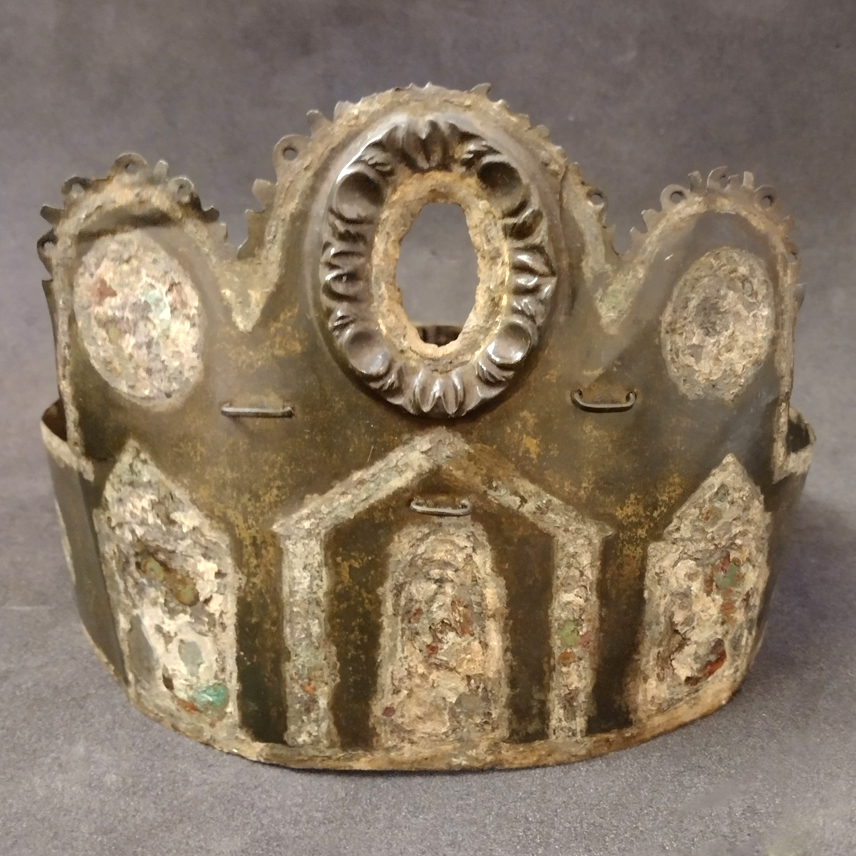
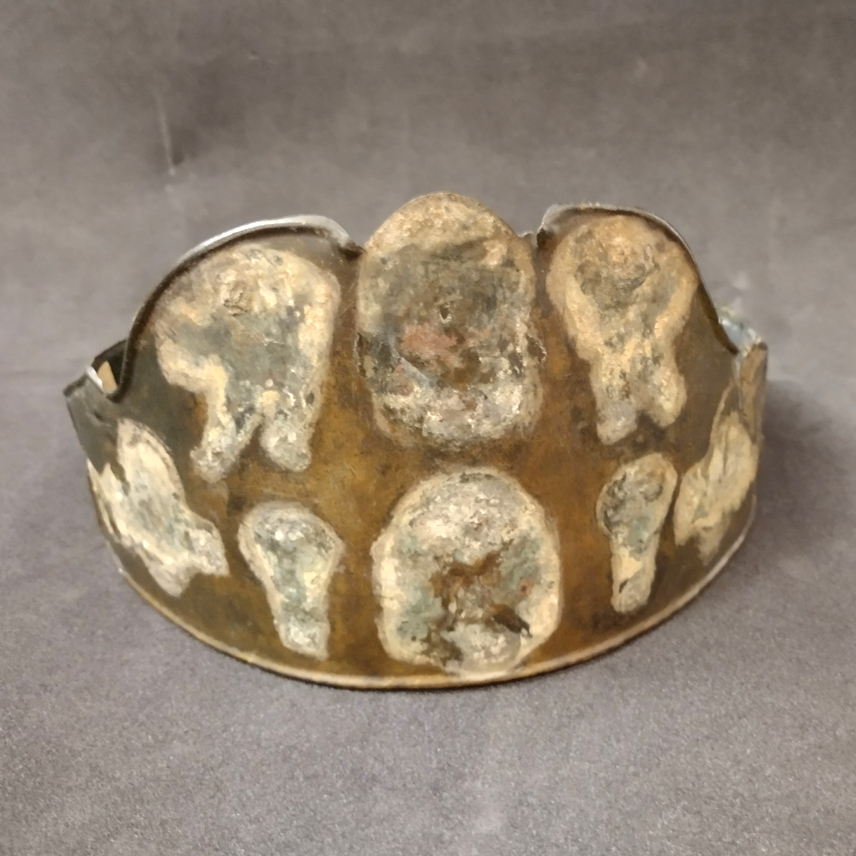
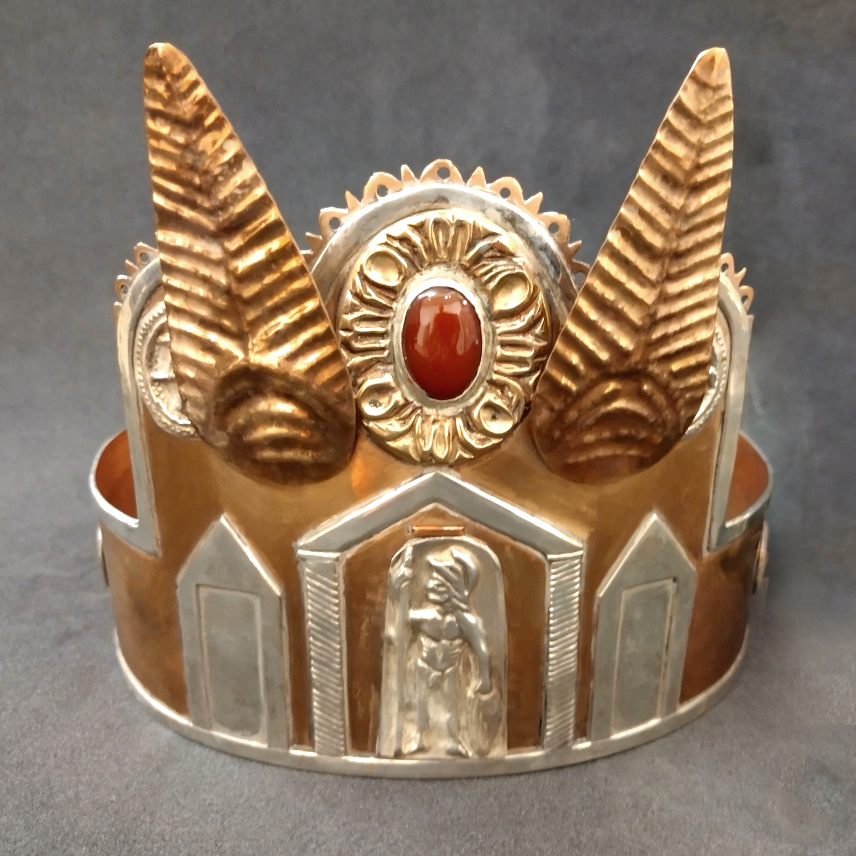
Original Cavenham Crown. Colchester + Ipswich Museum Service: Ipswich Borough Council Collections. © Ipswich Museums.

In the early 1920s, two bronze crowns and a ceremonial head-dress were discovered on Cavenham Heath in Suffolk. Shortly after, these were purchased by Nina Layard who first wrote about them in the Antiquaries Journal in 1925. [1] Whilst there is some speculation regarding exactly where they were discovered as the topographical description given bears a closer resemblance to either Mill Heath or the field with the cemetery than Cavenham Heath, there’s no doubting their splendour. [2]

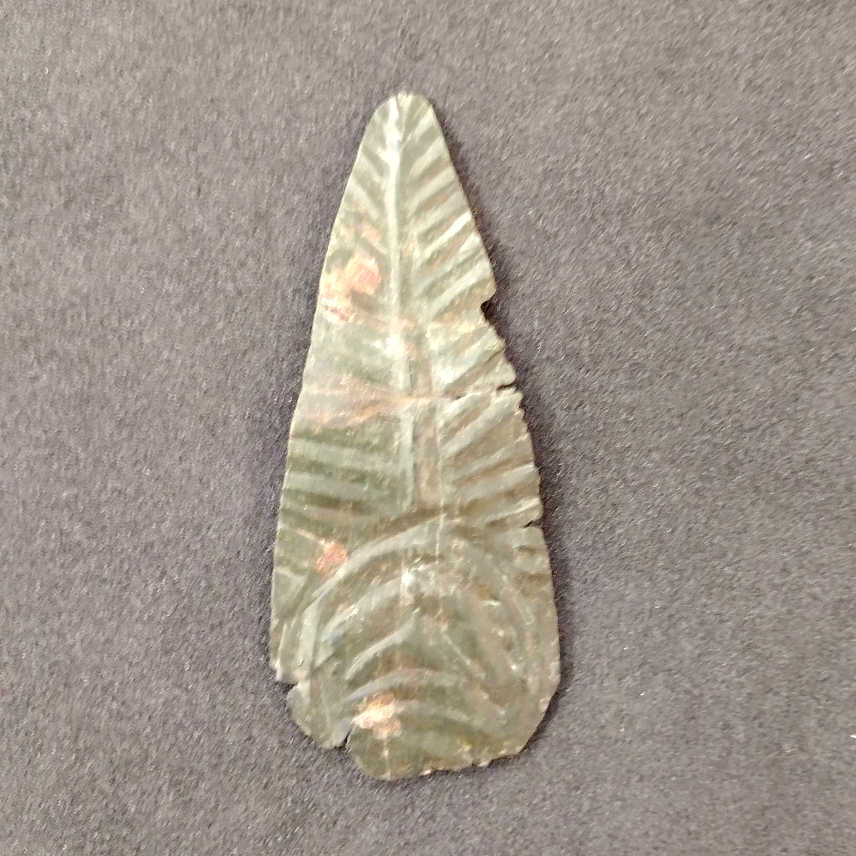
Beside the ‘Cavenham Crowns’ as they have since been coined, was a bronze feather believed to have been part of the head-dress ornamentation. Along with roof tiles and animal remains the material culture recovered indicates a Romano British settlement dating from the 1-4th century. The intact crowns are believed to have been ritually buried and are presumed to have been owned by either a priest or priestess [3] and are dated to the start of the settlement phase 1-2nd century. [4] At this time the Roman author Pliny the Elder described Britain as being “still spell-bound by magic” and continuing to perform “its rites with so much ritual.” [5]

Feather detail from original Cavenham Crown. Colchester + Ipswich Museum Service: Ipswich Borough Council Collections. © Ipswich Museums.

The design of the crowns is a fusion of Celtic and Roman religions “adding to growing evidence of a pagan revival at a time when Christianity was dominant in Britain.” [6] The largest of the crowns is 14cm in height at the front, tapering down to 4cm towards the back of the headband, and is made from one single sheet of bronze, whilst the smaller one at 11cm in height has the headband joined by means of a solder. [7] A niche-like scar in the centre at the front of the largest crown suggests the shape of a figure, as indicated by the remaining solder. [8] Two other niches flank the central figure, and it is thought that originally these bright golden coloured crowns would have been adorned with silver decorative plaques depicting Romano British deities and would have been inlaid with gems or glass. [9] As for the identity of the three plaques on the front, we can only wonder.

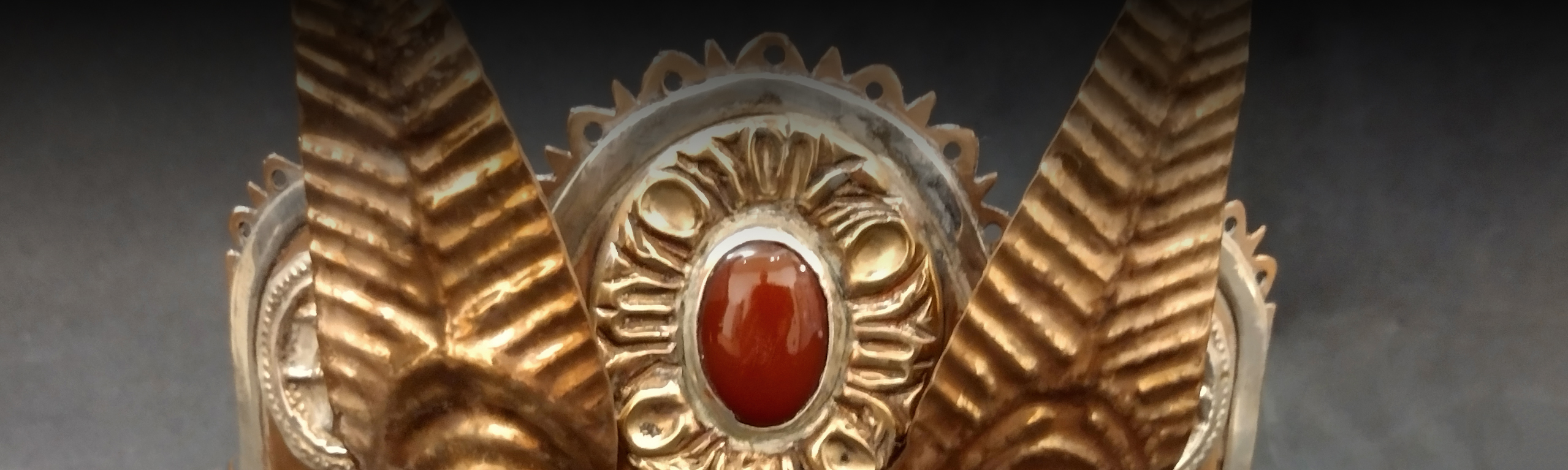
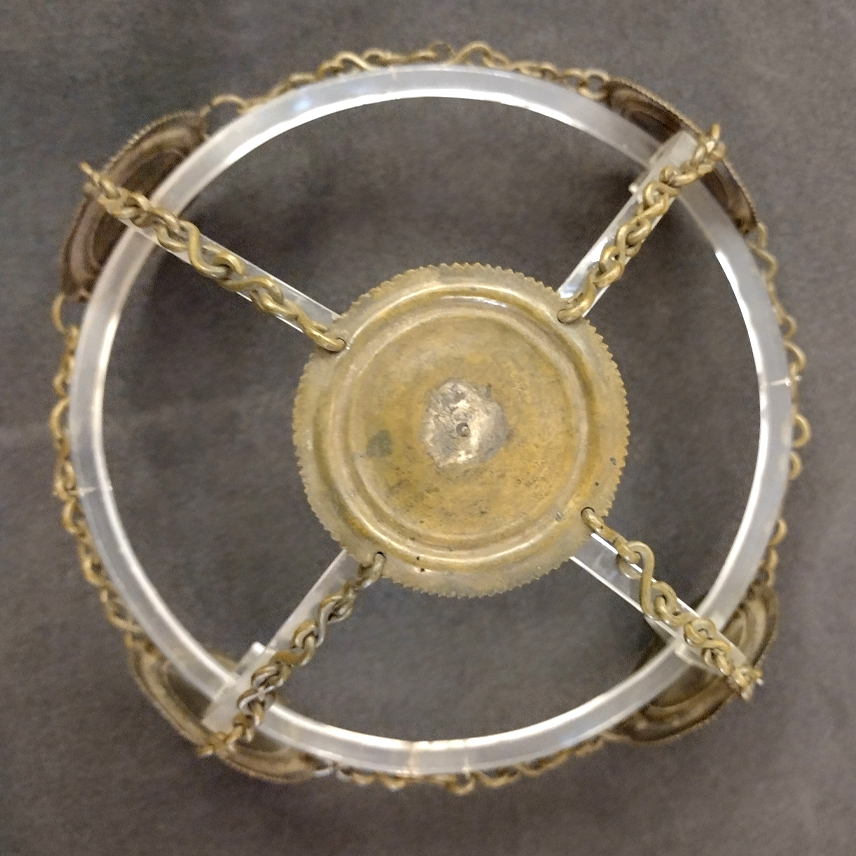
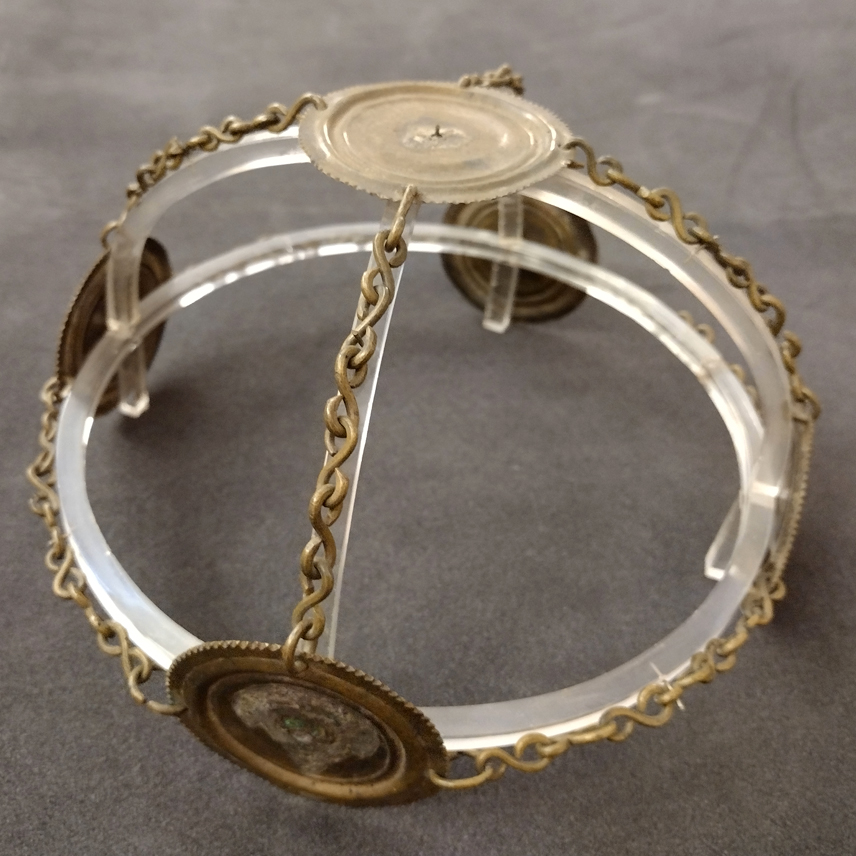
The bronze head-dress was made of 8 metal chains that are formed out of S shaped chain links that connect to 5 bronze discs, forming a kind of rhombus. It was designed to fit the head and may have once been placed over a leather cap with the slightly larger central ‘sun disc’ at 6.35cm positioned on the top of the head. The other 4 being positioned over each ear, the back of the head and the forehead. All 5 discs have serrated edges and are ornamented with holes punched in the centre and raised circular lines. [10]

Original ceremonial head-dress. Colchester + Ipswich Museum Service: Ipswich Borough Council Collections. © Ipswich Museums.

For thousands of years circles have long been symbolic representations of the sun. Whilst the chain on the Cavenham head-dress was functional, the use of the S shape integral to its design also assured further solar affiliations. Such S shapes were used to replicate solar imagery thought to denote the sun’s rays and are a consistent feature on many Romano-Celtic artifacts. [11]

Appropriating the spirits controlling the Sun was central to the cult of the Unconquered Sun, that originated in Syria and was closely associated with Mithraism, and became increasingly popular during the 3rd century under the reign of Emperor Aurelian. [12] As late as 312 AD, coins were still being commissioned depicting Sol Invictus which with the increasing popularity of Christianity were later replaced by Christ, [13] the great solar-god, hence Sun-day (Sunday) as the religious day of rest. [14]

The Cavenham Crowns are currently out of sunlight and in storage in Ipswich Museum.


Original ceremonial head-dress. Colchester + Ipswich Museum Service: Ipswich Borough Council Collections. © Ipswich Museums.
Original Cavenham Crown. Colchester + Ipswich Museum Service: Ipswich Borough Council Collections. © Ipswich Museums.


Replica Crown. Colchester + Ipswich Museum Service: Ipswich Borough Council Collections. © Ipswich Museums.


References

  1. Layard, N. (1925) The Antiquaries Journal. Bronze Crowns and a Brown Head-dress, from a Roman site at Cavenham Heath, Suffolk.
  2. CAM 095. Poorly located find spot record – Roman crown, Cavenham Heath; Mill Heath https://heritage.suffolk.gov.uk/Monument/MSF10448 and Heritage Gateway. Historic England Research Records – Lackford
    https://www.heritagegateway.org.uk/Gateway/Results_Single.aspx?uid=379950&resourceID=19191
  3. Moss, R. (2019) This ancient priest’s crown is a fusion of Roman and Celtic religions.
    https://museumcrush.org/this-ancient-priests-crown-is-a-fusion-of-roman-and-celtic-religions/
  4. Esposito, A. (2015) A Context for Roman Priestly Regalia: Depositional Practices and Spatial Distribution of Assemblages from Roman Britain. Theoretical Roman Archaeology Journal 2015
  5. After Chadwick, N. (1997) Pliny the Elder, Natural History. Druids. University of Wales Press
  6. Moss, R. (Ibid)
  7. Layard, N. (Ibid)
  8. Layard, N. (Ibid)
  9. Uniacke, J and Brownie, S. (2000) Cavenham Parish. Cavenham Crowns. http://www.cavenham-parish.co.uk/index.asp?pageid=711256
  10. Layard, N. (Ibid)
  11. Green, M.J. (1991) The Sun-Gods of Ancient Europe. Batsford, London
  12. Aldhouse-Green, M. (2018) Sacred Britannia: The Gods and Rituals of Roman Britain. Thames & Hudson, London
  13. Aldhouse-Green, M. (Ibid)
  14. Ferguson, J. (1970) The Religions of the Roman Empire. Thames & Hudson, London

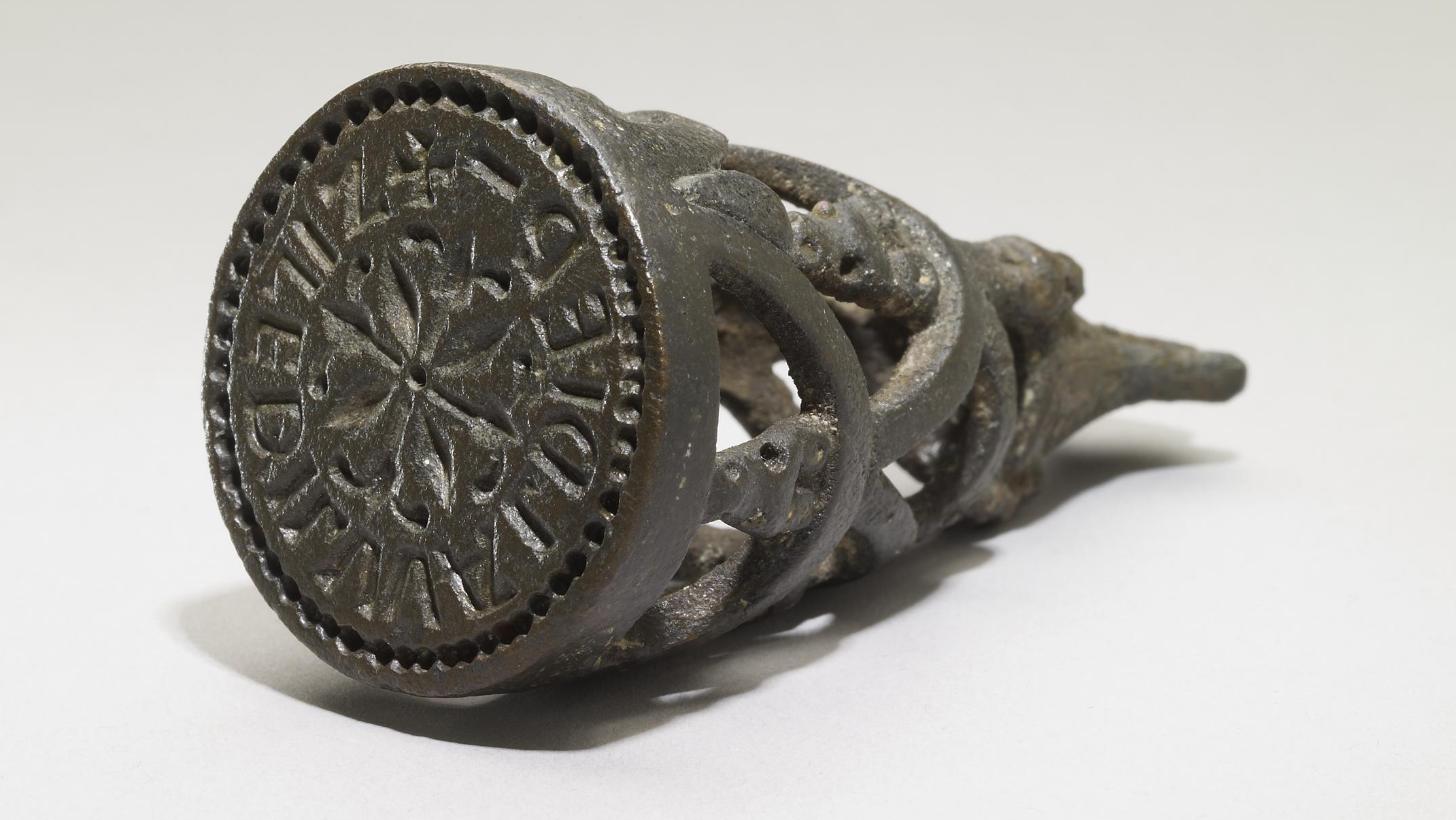
Bronze seal of Bishop Æthelwald of Dommoc

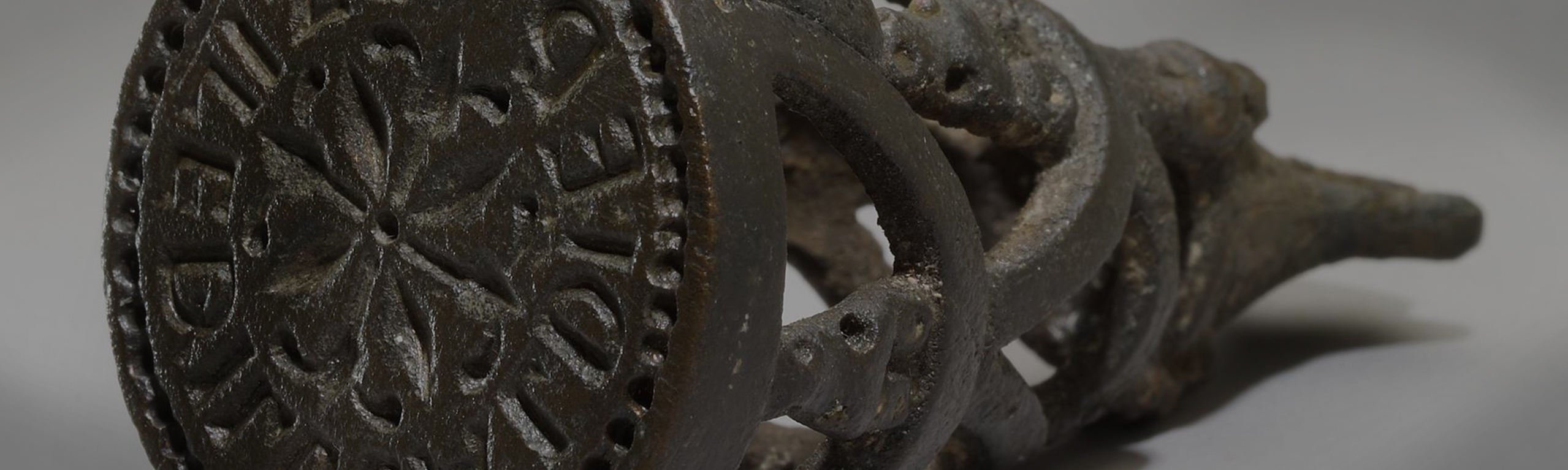
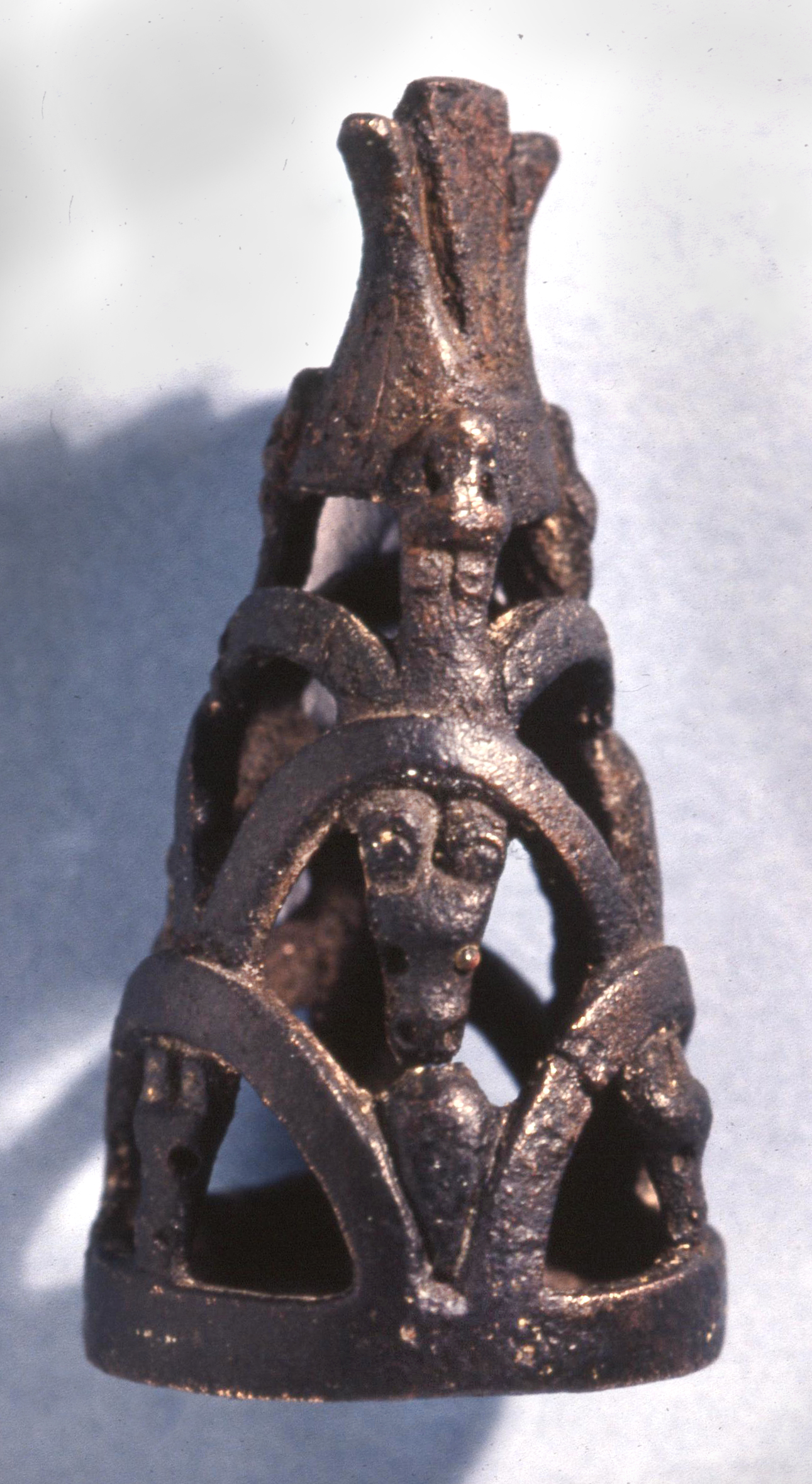
Æthelwald’s Seal, with inlaid red garnet eye. © The Trustees of the British Museum

Two hundred yards away from the monastery at Eye in Suffolk, a labourer in a garden unearthed a bronze seal that belonged to the Bishop Æthelwald of Dommoc, [1] which some believed to have been Dunwich. The monks of Eye owned the bishopric site of Dunwich until it was swallowed by the sea [2] and Æthelwald held office there from 845 to 870 approximately. [3] What makes this item a double ‘hidden history’ is both the fact that it is currently not on display in the British Museum as well as the mystery behind the objects design and inherent symbolism.

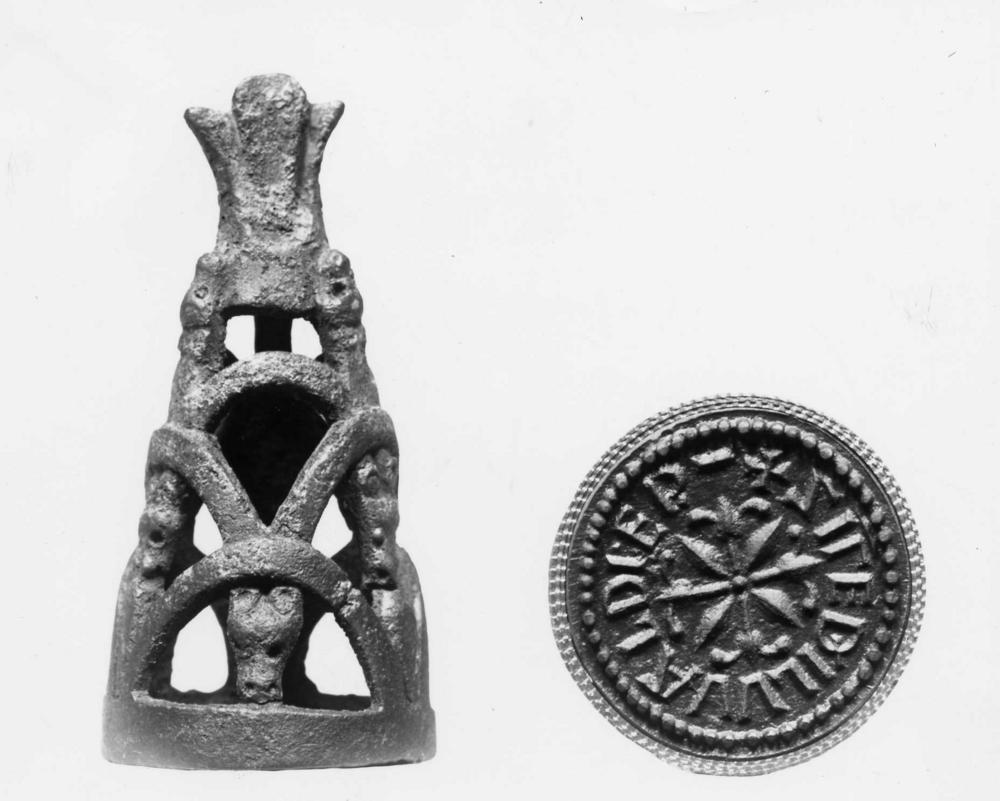
The bronze seal-die is mitre shaped and sub-conical with a Latin inscription that reads SIΓ EÐILVVALDI EP and is constructed of 2 tiered rows of 9 interlocking wolf heads which bite at the terminal, a solid triple leaf. It is stylistically similar to many zoomorphic heads on architectural sculptures and metalwork at the early medieval settlement around Deerhurst in Gloucestershire. [4] One of the animal heads on the seal still retains a minute inlaid red garnet eye, but why wolf heads, and why 9 of them?

There are 13 references to wolves in the bible that are usually used as metaphors to portray greed and destructiveness, [5] and in Genesis, the wolf uses intelligence and deviousness for selfish purposes. [6] The wolf was the symbol of pagan Rome, a culture in which Jesus lived and preached, indeed the Wuffing dynasty claimed to be direct descendants of Caesar and Odin. [7] “It was not long before the wolf became a symbol of evil” and a threat to those in Christ’s flock. [8] The Roman Church also used the image of the wolf as a devil that lurked among the Christian flock in the real world, giving the devil a physical presence on earth. [9] The symbol of the wolf looms large over Suffolk as the royal dynasty of the Wuffingas, the ‘people of the wolf’. [10] They travelled from Sweden and settled in this region before successfully ruling for many years, from Raedwald at Sutton Hoo c.617 – 625, King Beonna c.749-? near Butley, and then finally St Edmund c.853-869, the last descendant of the Wuffing kings who died in 869 for refusing to give up his Christian faith, before being tied to a tree and shot full of arrows before his beheading.

The number 9 is used 49 times in the bible and symbolizes divine completeness, conveying the meaning of finality. [11] Elsewhere, reference is made to there being 9 fruits of the spirit and 9 gifts of the spirit [12] and as a sacral number, 9 was the number of nights that a king, bishop or holy church could grant respite, should a thief need it, as declared by Æthelstan 894-939. [13]

The pre-Christian animistic worldview was one where nature was supernaturally charged, and animals were messengers from the otherworld. Pagan animism influenced the development of early Christianity and the material culture of the 7th century, which later had a brief resurgence in the 9th -10th centuries when these worlds collided spectacularly with the incoming Scandinavians. Introducing animal funerals and monumental expressions of their beliefs “the major cosmic player was the pagan wolf, rather than the Christian lion or dragon.” [14] Was the bronze seal a nod to the unwavering faith of the last of the Wuffing kings, or a symbol to always remind oneself to guard against and conquer ‘evil’?

Æthelwald’s Seal and Seal impression. © The Trustees of the British Museum
Æthelwald’s Seal. © The Trustees of the British Museum


References

  1. British Museum seal-impression, number 1822,1214.1 https://www.britishmuseum.org/collection/object/H_1822-1214-1
  2. Redstone, L. (1907-11) The Victoria County History of Suffolk, two vols.
  3. Wilson, D.M. (1964) Anglo-Saxon Ornamental Metalwork 700-1100 in the British Museum, Catalogue of Antiquities of the Later Saxon Period, I, London, cat. 18, 34.
  4. Webster, L. & Backhouse, J. (1991) The Making of England: Anglo-Saxon art and culture, AD 600-900 and Suffolk Heritage Explorer, Find Spot record EYE 009 – Findspot of an Anglo-Saxon bronze seal of Bishop Aethelwald of Dommoc. (Sax) https://heritage.suffolk.gov.uk/Monument/MSF451
  5. Wolves in folklore, religion and mythology. https://en.wikipedia.org/wiki/Wolves_in_folklore,_religion_and_mythology
  6. King, B. Wolf Symbolism and Meaning. https://whatismyspiritanimal.com/spirit-totem-power-animal-meanings/mammals/wolf-symbolism-meaning/#Christianity-Wolf
  7. Owen, G.R. (1981) Rites and Religions of the Anglo-Saxons
  8. Wollert, E. Wolves and Christianity. https://www.wolfsongalaska.org/chorus/node/347
  9. Jesse, L. (2000) Wolves in Western Literature. Chancellor’s Honors Program Projects. https://trace.tennessee.edu/utk_chanhonoproj/391
  10. Newton, S. (1993) The Origins of Beowulf and the pre-Viking Kingdom of East Anglia. Brewer.
  11. Garcia, K. (2022) The Meaning Of The Number 9 In The Bible And What It Represents. https://www.biblekeeper.com/number-9-meaning-in-the-bible/
  12. Daley, A. (2022) Biblical Number 9 – Significance, Appearance, And Symbolism In The Bible. https://joynumber.com/biblical-number-9/
  13. Chaney, W.A. (1970) The cult of kingship in Anglo-Saxon England: the transition from Paganism to Christianity. Manchester University Press.
  14. Pluskowski, A. (2007) The beast within. Breaching human-animal boundaries in Anglo-Saxon paganism. Saxon no. 45. David & Charles.

16th Century carvings, Gazeley Church

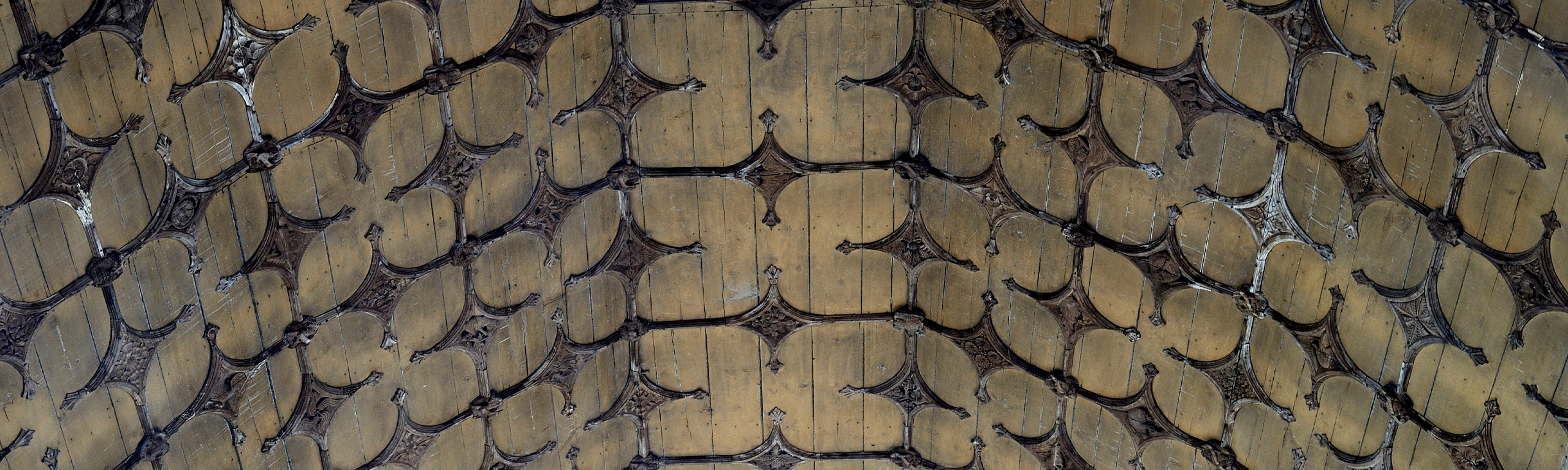
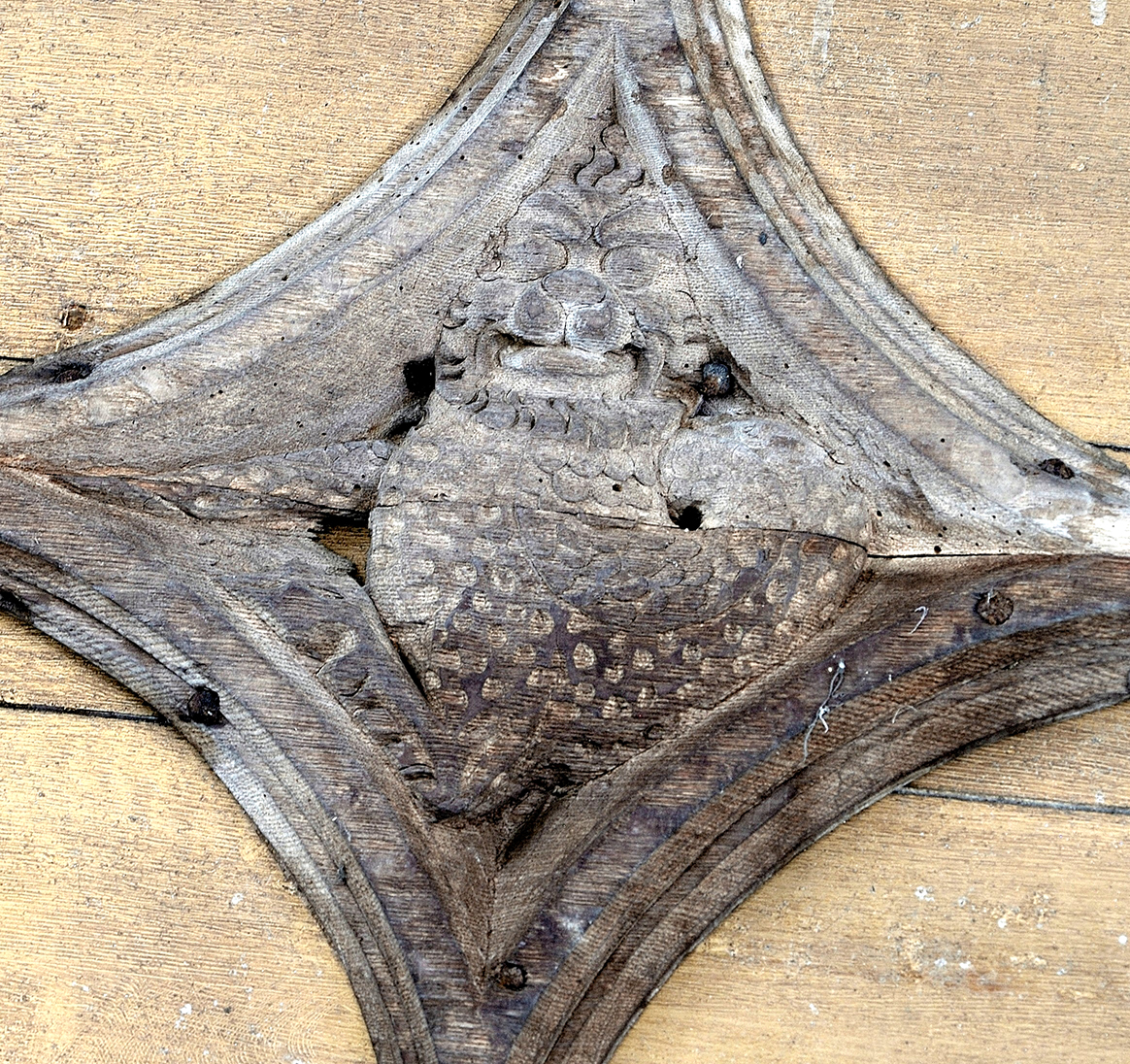
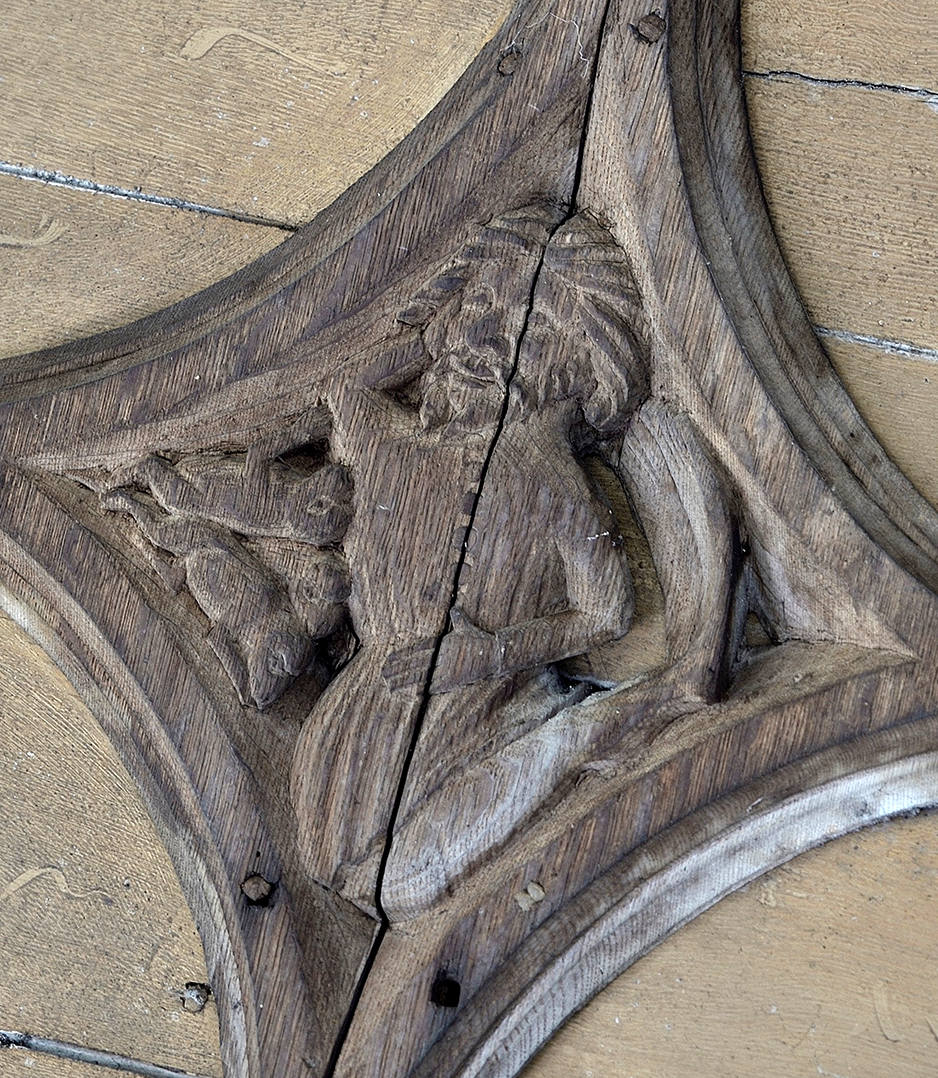
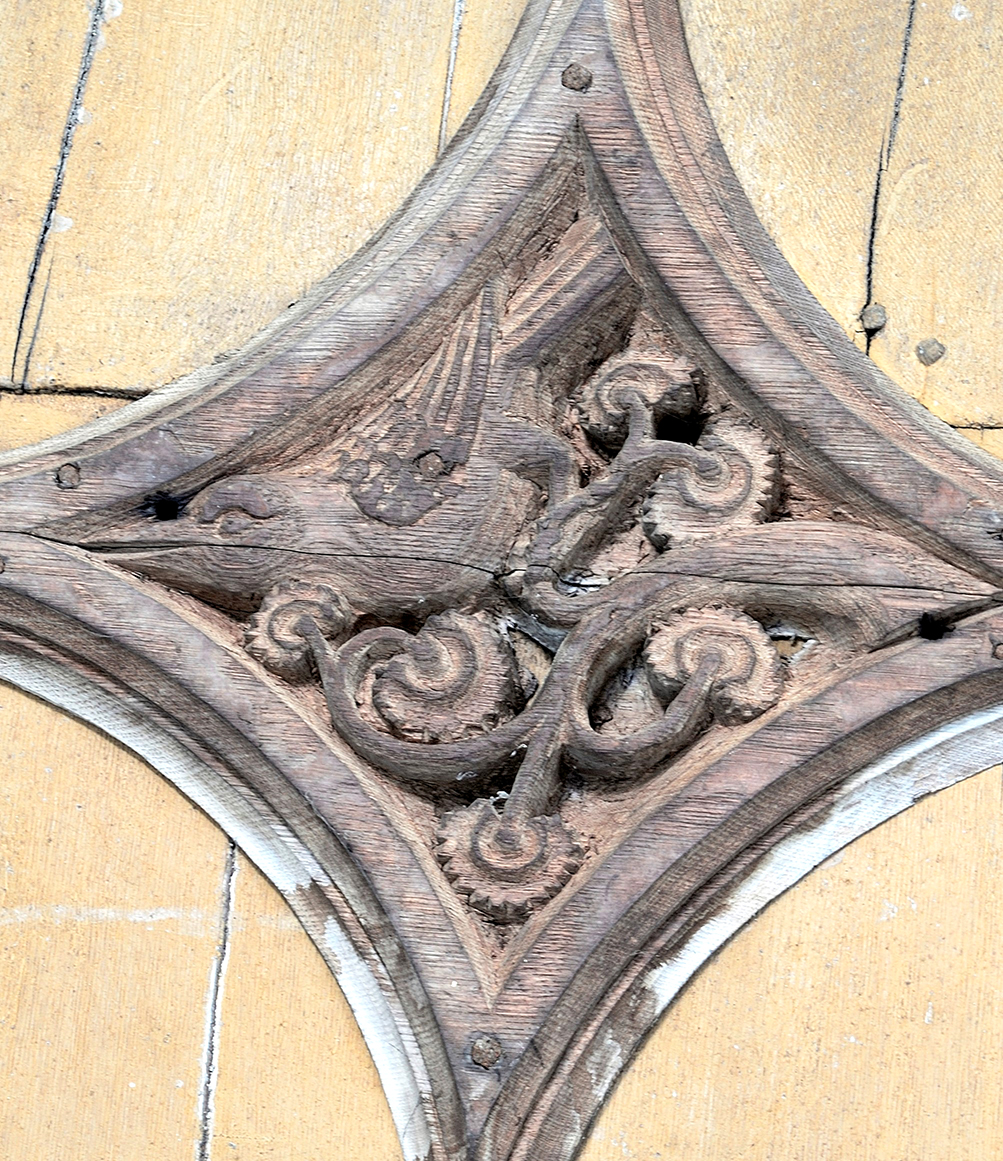
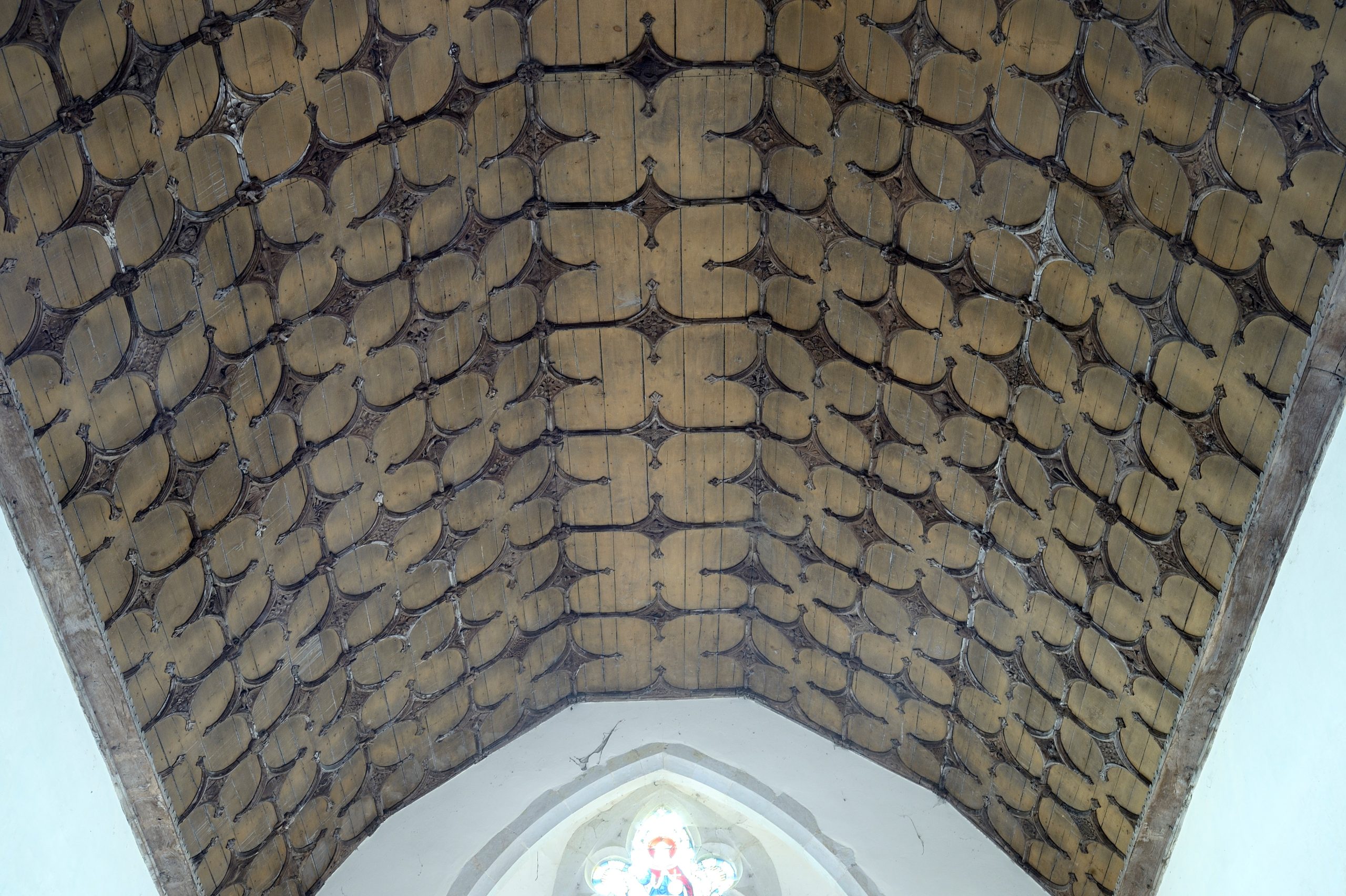
In Gazeley’s All Saints Church, highly rare and unique wooden carvings survive in the chancel wagon-roof dated to around 1530 A.D. [1] Hidden out of sight, too small and far too high to be seen from the ground, they escaped Henry VIII’s iconoclasts who rejected images or objects of veneration as forbidden in the Bible. In fact, it was only during the extensive refurbishments in 2008-2009 that many of the mythical beings, animals and objects were clearly photographed for the first time. There are approximately 150 lozenge shaped panels butted up against each other forming a wooden patchwork across the chancels wagon-roof.

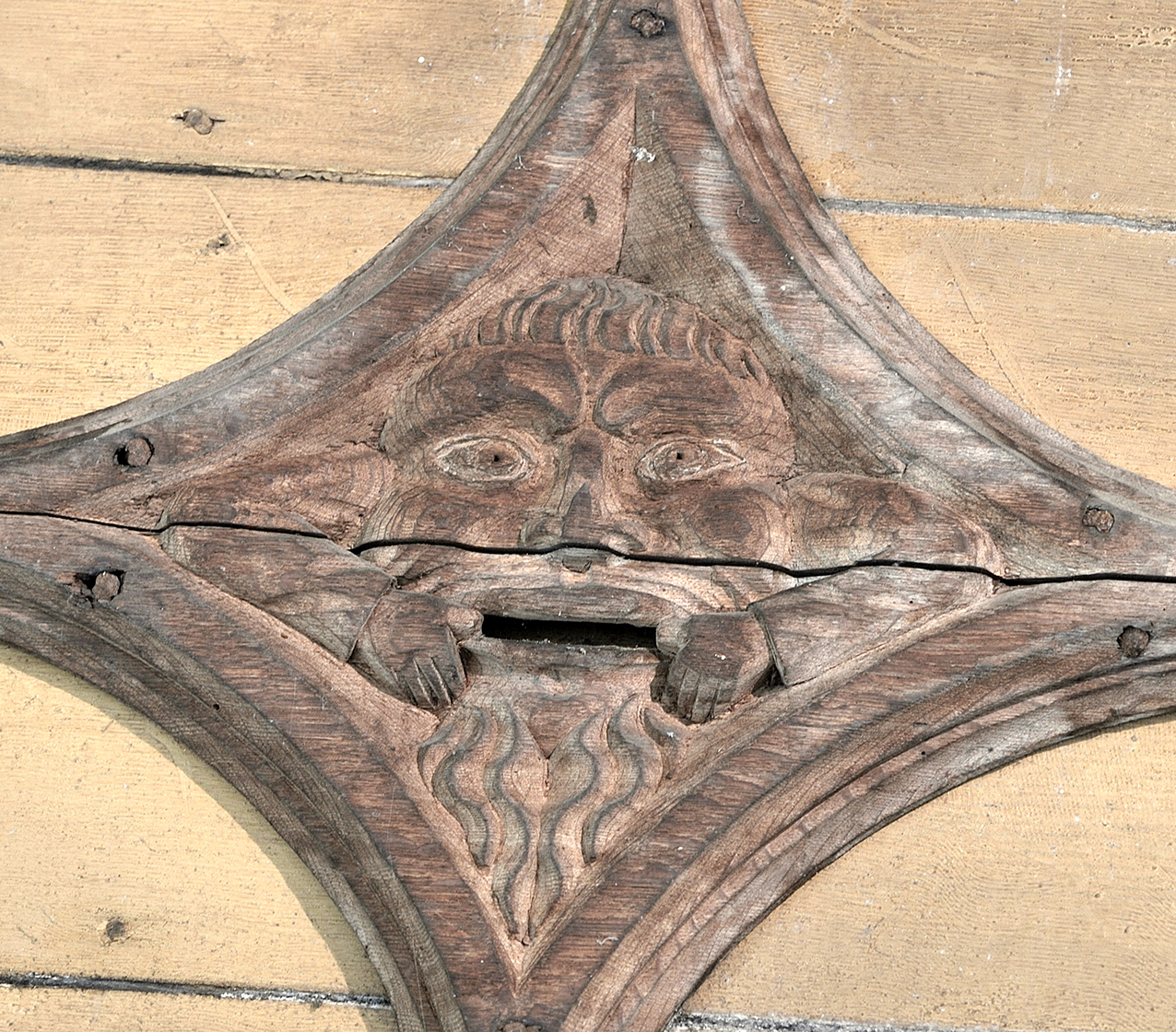
Mouth Puller. © Simon Johnson – Men Myths and Monsters.
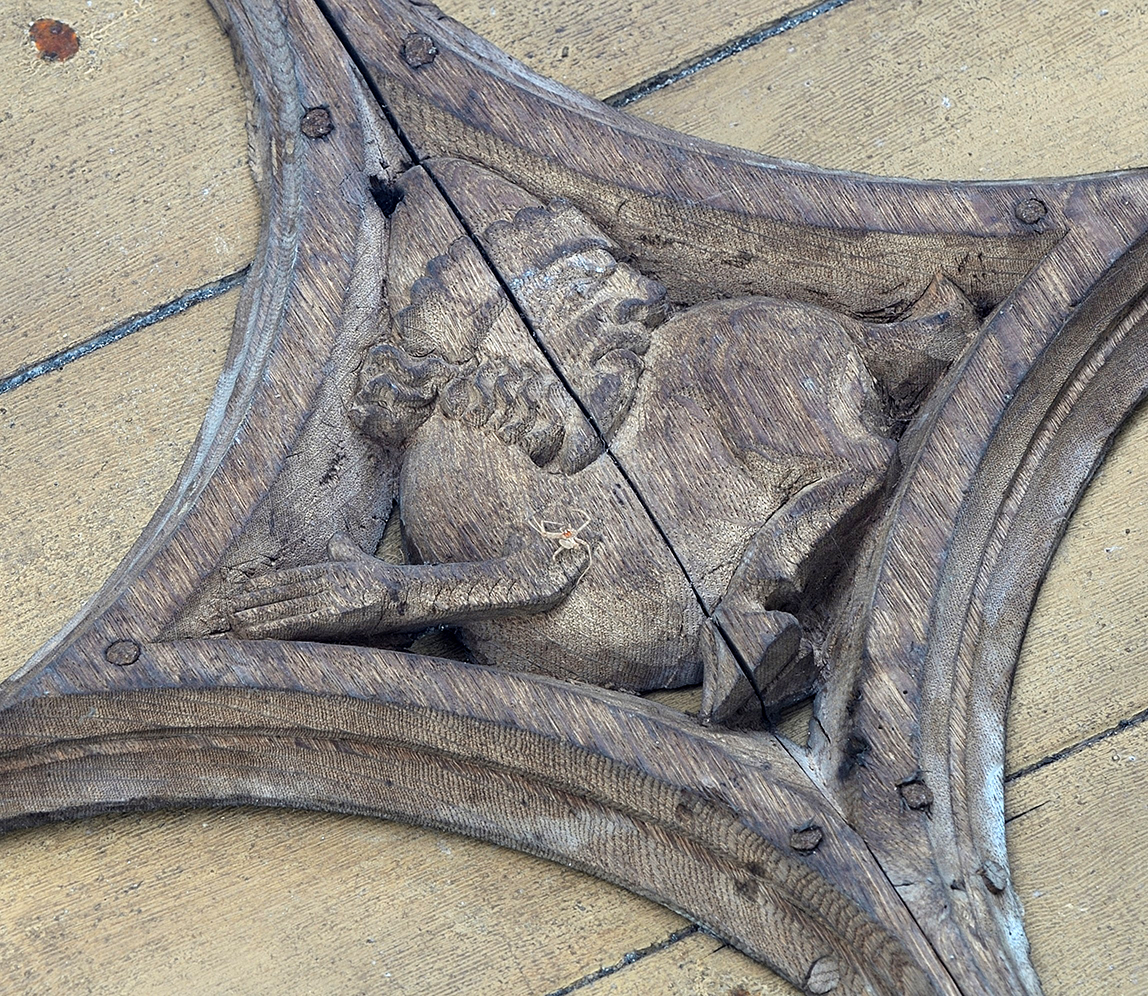
A Satyr. © Simon Johnson – Men Myths and Monsters.

The recording of the creator’s great works in the book of beasts or bestiaries as they were known at the time in the Middle Ages was among the most popular illuminated texts in northern Europe. The bestiary’s images were the medieval equivalent of today’s memes, serving as “snapshots of particular animals that ‘went viral’ in medieval culture” according to Elizabeth Morrison, senior curator of manuscripts at the Getty [2]. The bestiary’s stories and images were so popular that medieval artists readily adapted and adopted them, building on its predecessor the Physiologus written in the 2-3rd C, a Christian text telling stories about the nature of 48 real and mythical animals and plants [3]. It was an opportunity for the reader to reflect, decode and understand God’s great work, where nothing had been created without purpose, with each creature supporting “the edification and instruction of sinful man” acting as “a kind of moral entity, bearing a message for the human reader.” [4]

Wyvern. © Simon Johnson – Men Myths and Monsters.
Sciapod. © Simon Johnson – Men Myths and Monsters.

The etymology of a word revealed something of its nature, therefore the terrestrial world offered an analogy of the heavenly, if one could understand this mystical correlation between the earthly and its divine archetype, between the created and the creator [5]. A good example of this is the ape, and there are two examples of this in the roof at Gazeley. Described in the Bestiary [4] the ape “are so called because they ape the behaviour of rational human beings. They are very conscious of the elements… however his backside is… horrible and disgusting… the devil has the same form” [4]. Whilst we might understand the narrative above, it can be more of a struggle when trying to interpret some of the mythical creatures depicted in the roof of Gazeley Church, such as wyverns which were two legged dragons, the satyr that was half man half goat, or the Cynocephali, a human with the head of a jackal. Similarly, the surreal sciapod, an unusual man-like creature that had only one ginormous oversized foot which is often depicted in use a sunshade (which no doubt came in very useful in their originating habitat of Ethiopia or as Pliney the Elder, the Roman naturalist (23 – 79 A.D.) believed India) and is one of only two examples recorded in the whole of Suffolk.

However, the image of an apes head may also be that of a Panotti [6], a race of monstrous people with oversized ears that covered their entire body and were used as clothing as well as supporting them in flight. Similarly, the image of what was considered a bird may also be interpreted as a Peridexion Tree [7], a popular image in medieval bestiaries that attracted doves who gathered for the trees sweet fruit where they were also safe from dragons.

Bird / Peridexion Tree? © Simon Johnson – Men Myths and Monsters.
Internal roof-space. © Simon Johnson - Men Myths and Monsters. 
The chancel wagon-roof. © Simon Johnson – Men Myths and Monsters.

Photography courtesy of Simon Johnson, and with thanks to Rob Pilsworth.


We highly recommend Simon Johnson’s excellent book about the medieval roof carvings of
Gazeley’s All Saints Church
‘Men, Myths and Monsters’.


Church of All Saints Gazeley. © Creative Commons.

References

1. Russack, R. (2019) The Book of Beasts: The Bestiary in the Medieval World.
https://www.antiquesandthearts.com/the-book-of-beasts-the-bestiary-in-the-medieval-world/

2. Russack, R. (2019) Ibid.

3. Bond, S. (2019) Interpreting the Beasts of the Middle Ages.
https://hyperallergic.com/507274/interpreting-the-beasts-of-the-middle-ages/
 
4. Barber, R. (1993) Bestiary: MS Bodley 764: The Boydell Press, Woodbridge.
https://www.suffolknews.co.uk/newmarket/news/future-is-looking-up-thanks-to-ceiling-figures-and-donor-9233769/
 
5. The Medieval Bestiary
http://penelope.uchicago.edu/~grout/encyclopaedia_romana/britannia/anglo-saxon/flowers/bestiary.html

6. Private correspondence, Prof. of Medieval English.
https://en.wikipedia.org/wiki/Bestiary#/media/File:Perindens.jpg

7. Johnson, S. (2021) Men, Myths and Monsters book. https://gazeleychurch.org/men-myths-and-monsters/

Undley Runes, Lakenheath

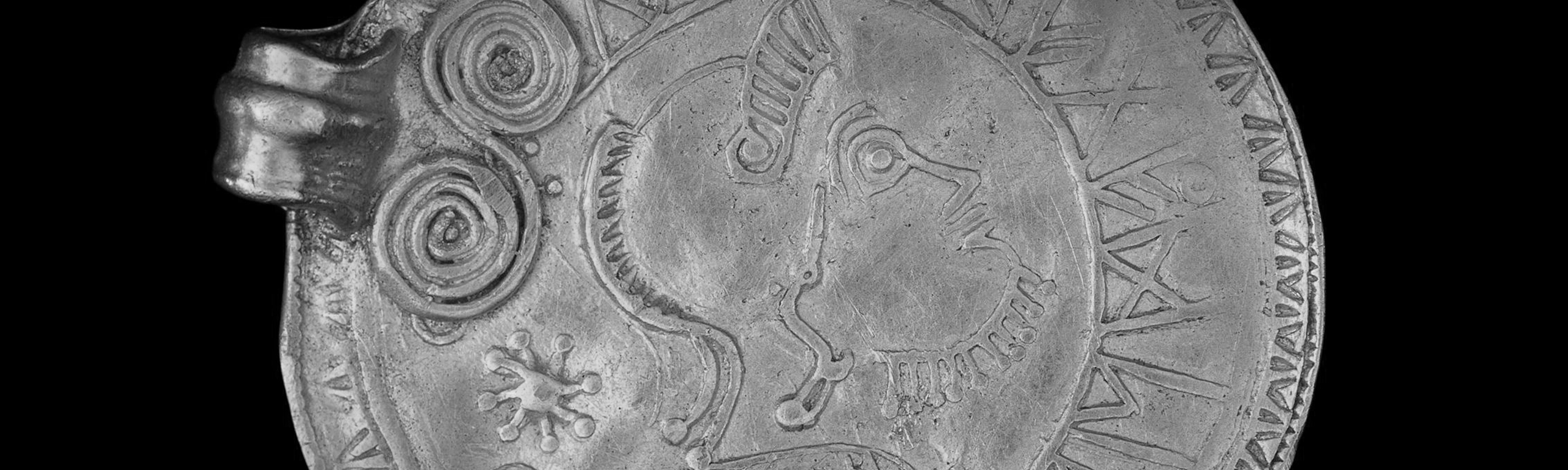
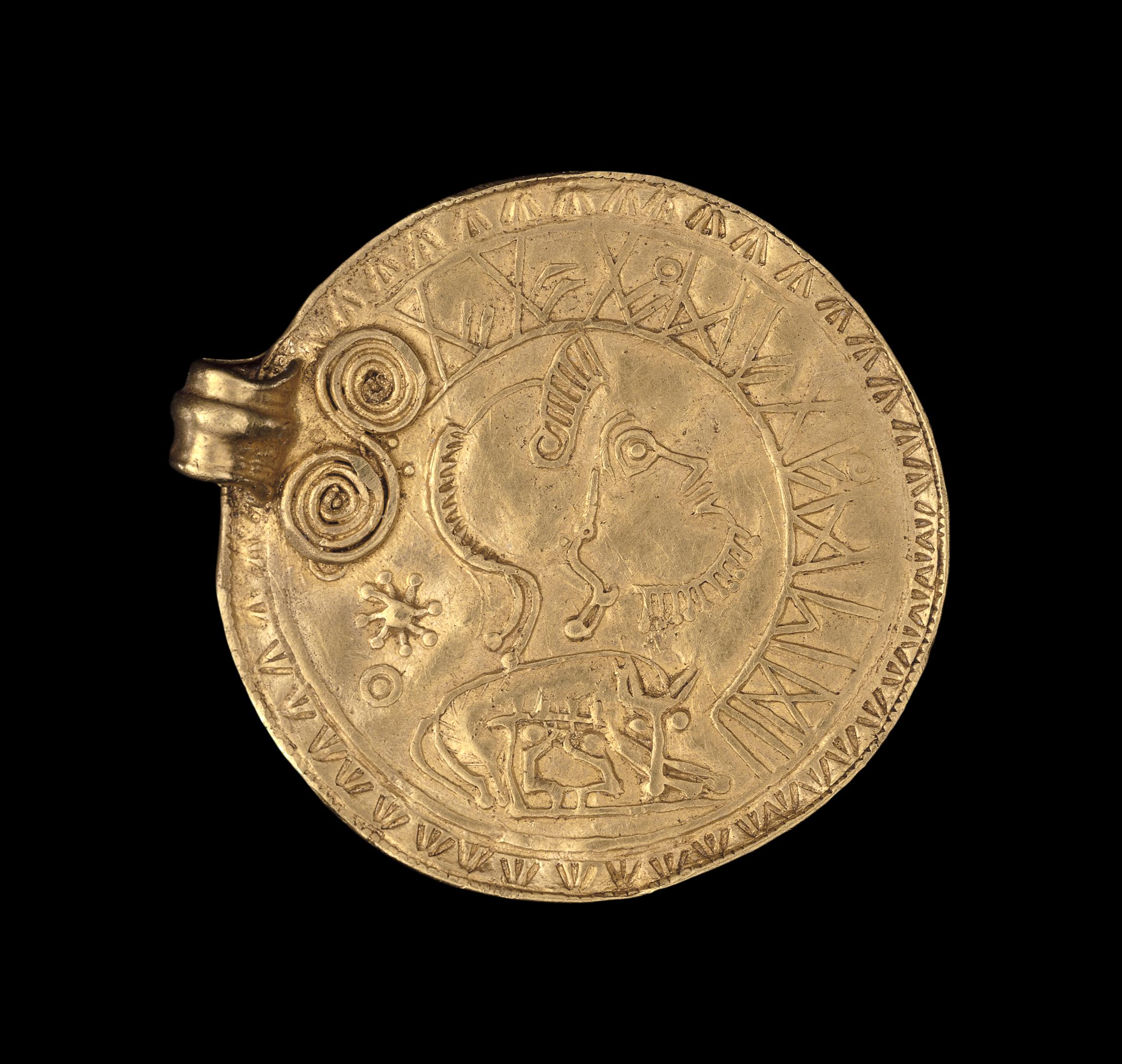
In 1981 on Undley Common near Lakenheath, a gold bracteate, a type of thin gold pendant was discovered in a grave. Its design was based on Roman coins struck for Constantine I between 324 and 330 A.D. [1] with the bracteate itself dated to 475 A.D. On its surface a runic inscription reads, from right to left ᚷ‍ᚫᚷ‍ᚩᚷ‍ᚫ ᛗᚫᚷᚫ ᛗᛖᛞᚢ g͡æg͡og͡æ mægæ medu that has been described as what ‘may be the earliest writing in the English language’ [2]. The runes, 42 visible (and 2 or possibly 3 hidden) hand‐stamped spear‐headed symbols are Anglo-Frisian, an Anglic, English and Scottish and Frisian variety of West Germanic languages where the Anglo-Frisian dialect changed the ‘a’ vowel sound to ‘æ.’ [3]. The bracteate was made in Schleswig-Holstein or southern Scandinavia before being brought to England by an Anglian settler [4].

Undley Bracteate © The Trustees of the British Museum.

The imagery on the bracteate across its 2.3 cm diameter depicts the profile of a helmeted head, a bearded youth [5] with two eight pointed stars and a ring dot, possibly the sun above a she-wolf, suckling Romulus and Remus, the mythical twin brothers and founders of Rome. The late Antique kings of the 5-6th Century claimed to be direct descendants of Woden / Odin, the truth seeking wandering shamanic god, in their genealogies, placing Caesar as Odin’s son [6] which all supported these kingly elites attempts in trying ‘to look Roman’ [7]. Odin’s endurance is tested in the mythical tale where he hung himself on the sacred World Tree Yggdrasill for nine days and nights suspended between the living and the dead in an entranced ordeal of endurance in order to receive the wisdom of the runes. Sacred trees had the potential to become portals to alternative realms is a widely held universal concept and a fundamental narrative in most shamanistic based societies, an important aspect of such visionary journeys [8].

Runes have names for mnemonic and/or symbolic purposes [9] and as well as being alphabetical letters, runes can be charms and constellations of concepts and were in use up until the 11th Century in Britain where their simple form continued to portray mystical symbolic and complex meanings, used for divination and talismanic magic [10]. Runes have been described as primal letters with their historical development beginning in the second or third Century, adapted from the Roman or Greek alphabet [11]. The word rune originates from words meaning ‘secret’ with runes themselves conveying multiple meanings, connecting us through their natural form to a time of the first forests of ancient Europe where symbols carried a signature of both symbol and sound [12].

The runic inscription on the bracteate may be read, as one might suspect given what we have just discovered, as having a variety of meanings. It may be is says ‘howling she-wolf’ and ‘reward to a relative’ [13] alluding to mead for the kinsmen. Another interpretation is that the bracteate reads ‘this she-wolf is a reward to a kinsman’ or that the meaning is more of a magical formula, like ‘abracadabra: to a kinsman this reward’ [14]. The word gægogæ appears to be some form of magical invocation or battle cry [15].


References

1. Briggs, D. (2014) An emphatic statement: Undley ‐ a gold bracteate and its message in fifth‐century AD East Anglia. Briggs in Sekunda (ed.), Wonders Lost and Found. A Book to Celebrate the Archaeological Work of Professor Michael Vickers. Monograph Series Akanthina, Gdańsk.

2. https://www.suffolkinstitute.org.uk/suffolk-s-story-11

3. Palmer, S.B. (2005). “Gægogæ Mægæ Medu”, in: What Planet is This?
http://inamidst.com/notes/undley

4. British Museum. https://www.britishmuseum.org/collection/object/H_1984-1101-1

5. Palmer, S.B. (2005). Ibid.

6. Owen, G.R. (1981).

7. Blair, J. (2018) Building Anglo-Saxon England.

8. Tolley, C. (2009) Shamanism in Norse Myth and Magic. 2 vols. Helsinki

9. Looijenga, T. (2003) Texts and Contexts of the Oldest Runic Inscriptions.

10. Hussey, L.E. (1989) Northern European Shamanism: A Preliminary Reconstruction.

11/12. Berk, A. (2002) A Rune with view.
https://endicottstudio.typepad.com/articleslist/a-rune-with-a-view-an-introduction-to-the-visual-alphabet-of-the-northern-world-by-ari-berk.html

13. British Museum. Ibid.

14. Palmer, S.B. (2005). Ibid.

15.  Wikipedia. https://en.wikipedia.org/wiki/Undley_bracteate

Church of St Mary’s Troston Graffiti Inscriptions

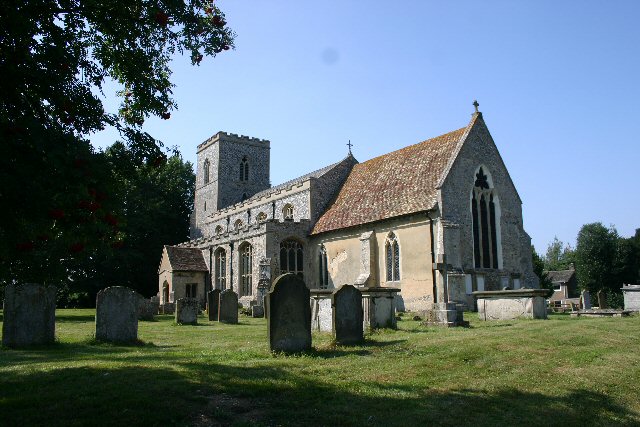
The Church of St Mary’s at Troston was largely finished by 1300 A.D. with its porch added later in the 15th C, and was for the vast majority of the local population, as with much of the country, a symbol of local pride forming the hub of parish life.

Inside the church there are an unusually high number of graffiti inscriptions, a combination of decorative patterns, figurative drawings and crosses with the tower arch depicting inscriptions of birds, fishes and animals, including two depictions of a deer [1]. One possible interpretation for the frequency of birds found in medieval graffiti is that they are associated with the Holy Spirit, representative of the doves released by Noah [2] with avian symbolism being a prevalent icon of Christianity more generally, such as an eagle, peacock, or pelican.

The date ranges of the graffiti inside varies widely, from the 1350’s for the Troston Demon to 17–18th C for many of the drawings of figures and head profiles. More curious are the ritual protection symbols, the compass-drawn designs, and ‘apotropaic’ markings.

Troston Graffiti © M. J. Champion

Compass-drawn designs such as the ‘daisy wheels’ also known as the hexafoil, were created as ‘apotropaic’ ritual protection marks and were designed to ward off the ‘evil eye’ [3]. They may have also emulated older solar symbols and thus repel darkness. The power within the symbol is thought to echo that of Solomon’s Knot [4]. King Solomon’s ring bore the symbol of a knot, a seemingly endless line believed to be engraved by God, which served to subdue demons by ensnaring evil forces within the symbol. Whilst the church preached its power during baptism services in being able to drive out demons in the physical world and the subtle influences of witchcraft and the Devil “the practice of creating such markings appears to have continued unabated.” [5] It was believed that the power of such symbols protection from malevolent forces and remained in use within peoples homes right into the early 19th C [6/7].

Troston Graffiti © M. J. Champion

An unusual drawing of one figure can be seen standing beside a five-pointed star and a deer.  Although today we may often associate the pentagram with a symbol for dark magic, during the Middle Ages it was an overtly Christian symbol with the five points representing the five wounds of Christ, and was closely associated with protection from demons. The star was seen as a ‘pure’ shape, giving it an apotropaic nature especially when it came to protection against demons [8]. The symbol of the pentagram, or pentacle, became further embodied in the 14th C poem of Sir Gawain and Green Knight whose shield carried this symbol, mirroring the Star of Bethlehem and the five virtues of knighthood. The choice of a deer may also be deliberate as the Way of Solitude and Purity was symbolised by the Stag, which was also regarded as a type of religious aspiration. In Christian symbolism, the stag was associated with the values of love, honour, kindness, mercy, grace, and forgiveness.

On the east face of the chancel arch a ‘demon trap’ has been drawn. The Troston Demon was the equivalent of a medieval cartoon character and is likely dated to the 1350s [9]. Its face can be seen contorted in agony, screaming with its eyes wide open with its oversized tongue lolling forwards. Inside this figure a pentacle, cut deep into the stonework as though this has been redrawn over time, time and time again in an attempt to trap it and pin it “to the wall for evermore”. [10]

Left, ‘Solomon’s Knot’ medieval graffiti amongst later graffiti in St. Denis’ Church porch, Silk Willoughby, Lincolnshire. © Commons Licence, Richard Croft. Right, Church of St. Mary, Troston © Commons Licence, Keith Evans.

References

1. Champion, M. (2015) The Graffiti Inscriptions of St Mary’s Church, Troston.
Proceedings of the Suffolk Institute of Archaeology, 43, part 2.

2. Coskun, A. (2020) Life and Death, Demons and Devotion: The Medieval Graffiti of Surrey’s Parish Churches.
Champion, M. (2015) Medieval Graffiti: The Lost Voices of England’s Churches.

3. Champion, M. (2015) Medieval graffiti – in pictures. The Guardian.
https://www.theguardian.com/artanddesign/gallery/2014/mar/29/medieval-graffiti-pictures-lydgate

4. Champion, M. (2015) The Graffiti Inscriptions of St Mary’s Church, Troston.
Proceedings of the Suffolk Institute of Archaeology, 43, part 2.

5. Champion, M. (2016) Graffiti Survey: Interpretation Record, Bodiam Castle, East Sussex.

6. Fairey, C. (2018) Protective Devices, Apotropaic Symbols and Witch Marks on Historic Buildings;
with examples from Cheshire, Shropshire and Staffordshire.

https://sites.google.com/site/charlesfaireyhistorian/publications/protective-devices-apotropaic-symbols-and-witch-marks

7. Hall, R. Warding off evil with witch marks. The National Trust.
https://www.nationaltrust.org.uk/features/witch-marks-these-marks

8. Champion, M. (2015) Medieval Graffiti: The Lost Voices of England’s Churches.

9. Carson, J. (2021) Can you spot the secret Medieval graffiti demon?
Scratched into the wall of a Suffolk church, a satanic evil awaits.
https://www.historyhit.com/troston-demon-graffiti/

10. Champion, M. (2013) Medieval Graffiti: The Lost Voices of England’s Churches.
http://medieval-graffiti.blogspot.com/2013/